Hardly Dark Ages

Short 01 · 1215 · 2 min read

How 40 Pigs Brought Down a Castle

In 1215, King John needed to break Rochester Castle. His secret weapon: forty very fat pigs.

A castle in rebel hands

In 1215 Rochester Castle was held by rebel barons, and King John wanted it back. From October to December of that year his army laid siege to it. The siege is well documented: English Heritage and the Magna Carta Trust both describe it, and its most unusual detail goes back to a royal order recorded in the Close Rolls, printed by T. D. Hardy in 1833.
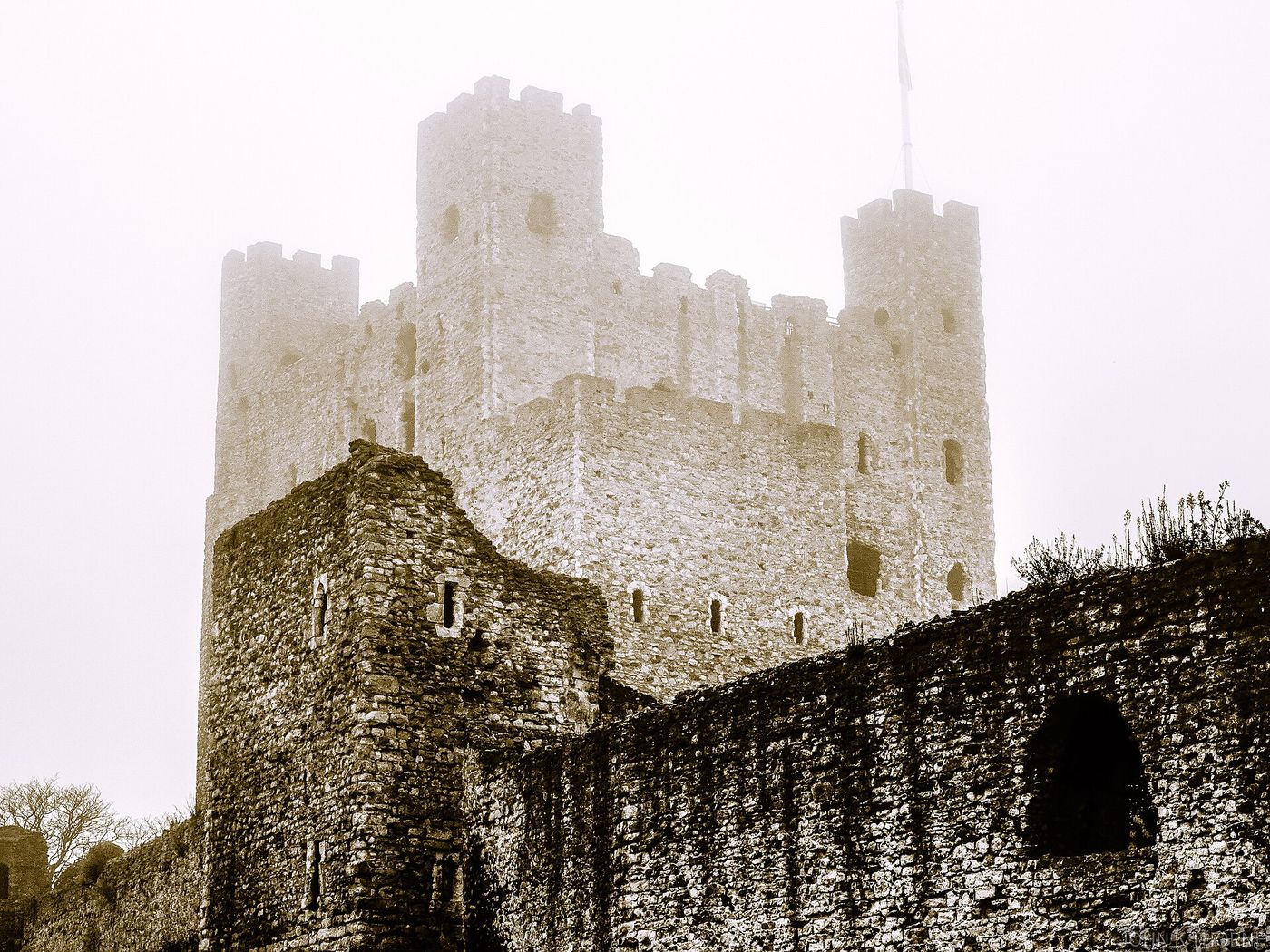
Rochester Castle seen from a distance, with the tall square stone keep rising above its surroundings
Rochester Castle today. The great stone tower is the keep.John K Thorne, public domain, via Wikimedia Commons
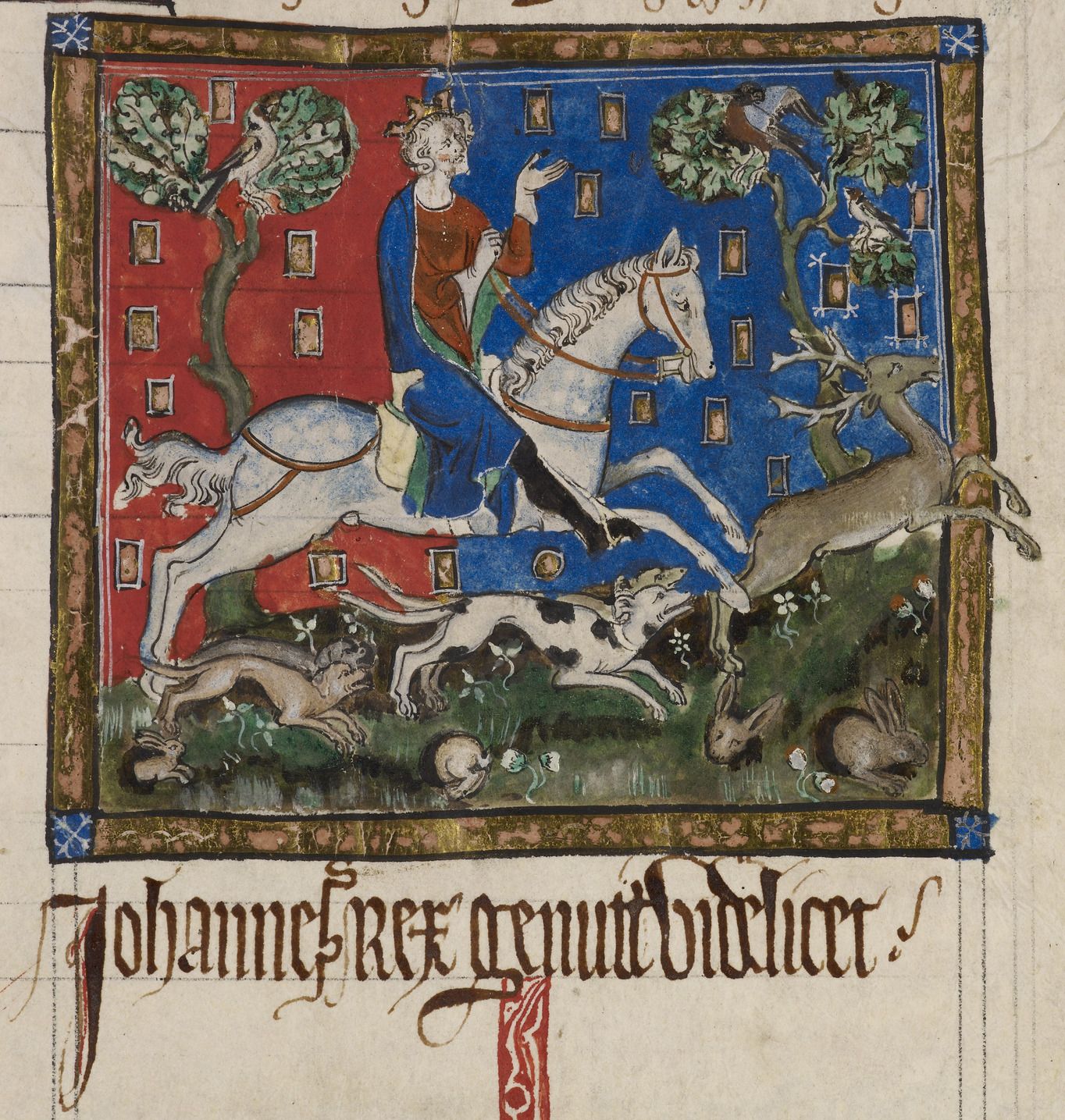
Medieval manuscript illumination of King John hunting
King John hunting, from a copy of the Statutes of England. The manuscript was made in the 14th century, roughly a hundred years after John.British Library, public domain, via Wikimedia Commons

John's army first took the outer part of the castle, the bailey. The keep was another matter. This giant stone tower would not budge, and the rebels inside held out.
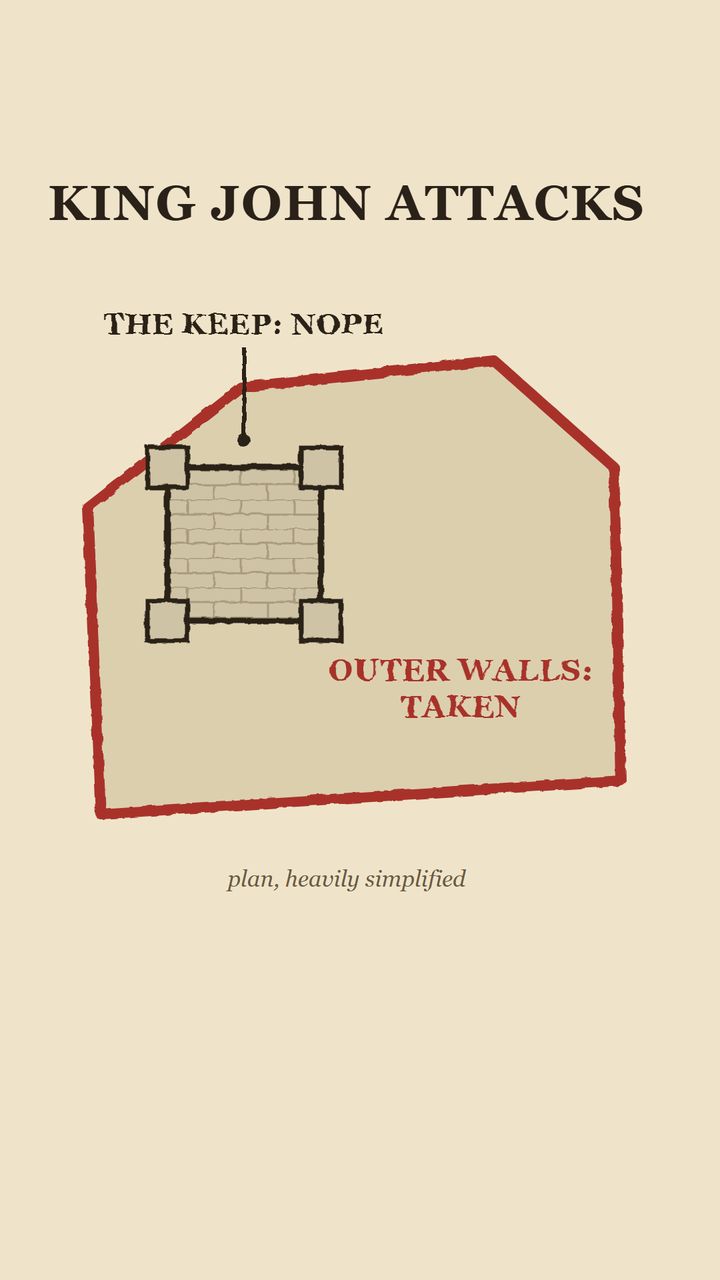
Simplified plan of Rochester Castle: the outer wall is marked as taken, while the keep in the middle still stands
The outer walls fell first. The keep held.Diagram: Hardly Dark Ages (simplified)

Going under the walls

If the walls could not be broken from above, they could be attacked from below. John's miners dug a tunnel beneath one corner of the keep, the south-east corner, and propped up the walls above it with timber. As long as the wooden props stood, the masonry stayed in place. The plan was to make sure they did not stand for long.
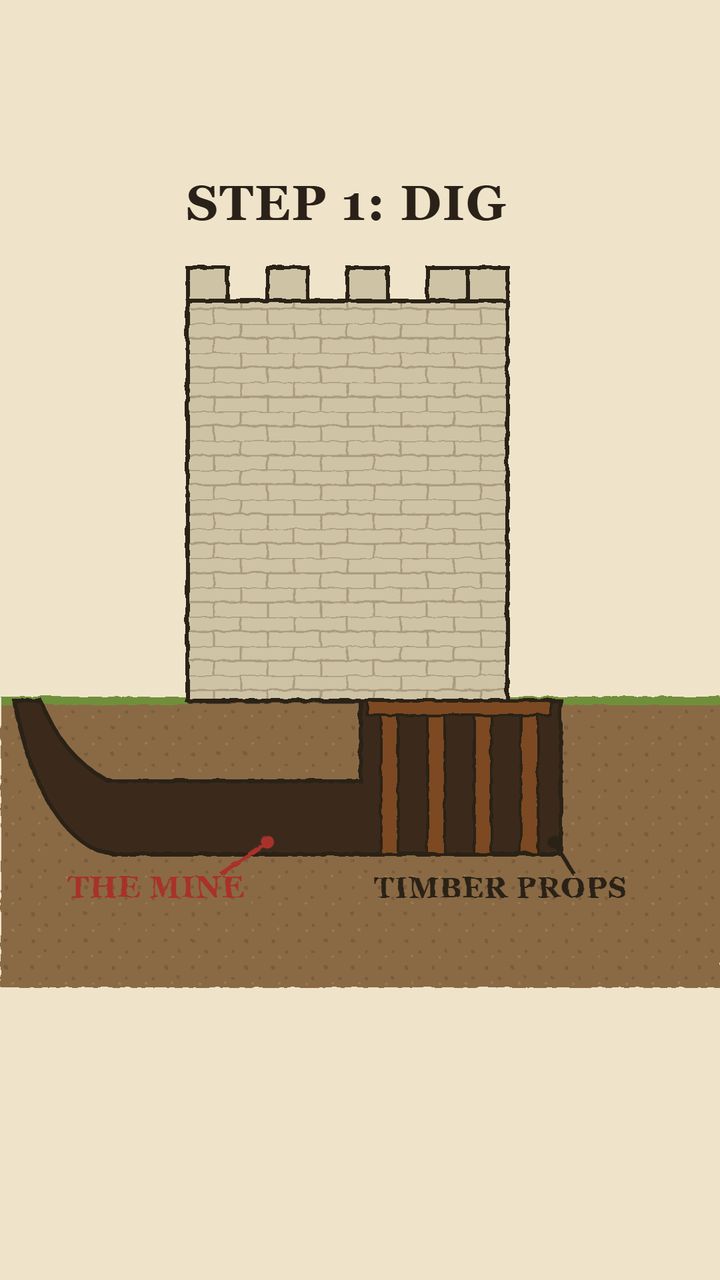
Cross-section of the keep: a tunnel dug beneath one corner, held up by timber props
Step one: dig a mine under the corner and hold it up with timber.Diagram: Hardly Dark Ages (simplified)

Forty of the fattest pigs

To bring the corner down, the timber props had to burn. So John sent an order: forty of the fattest pigs, the ones least good for eating. English Heritage, pointing to the original entry in the Close Rolls, and the Magna Carta Trust both report that the fat of these pigs was used to set fire to the props in the tunnel.
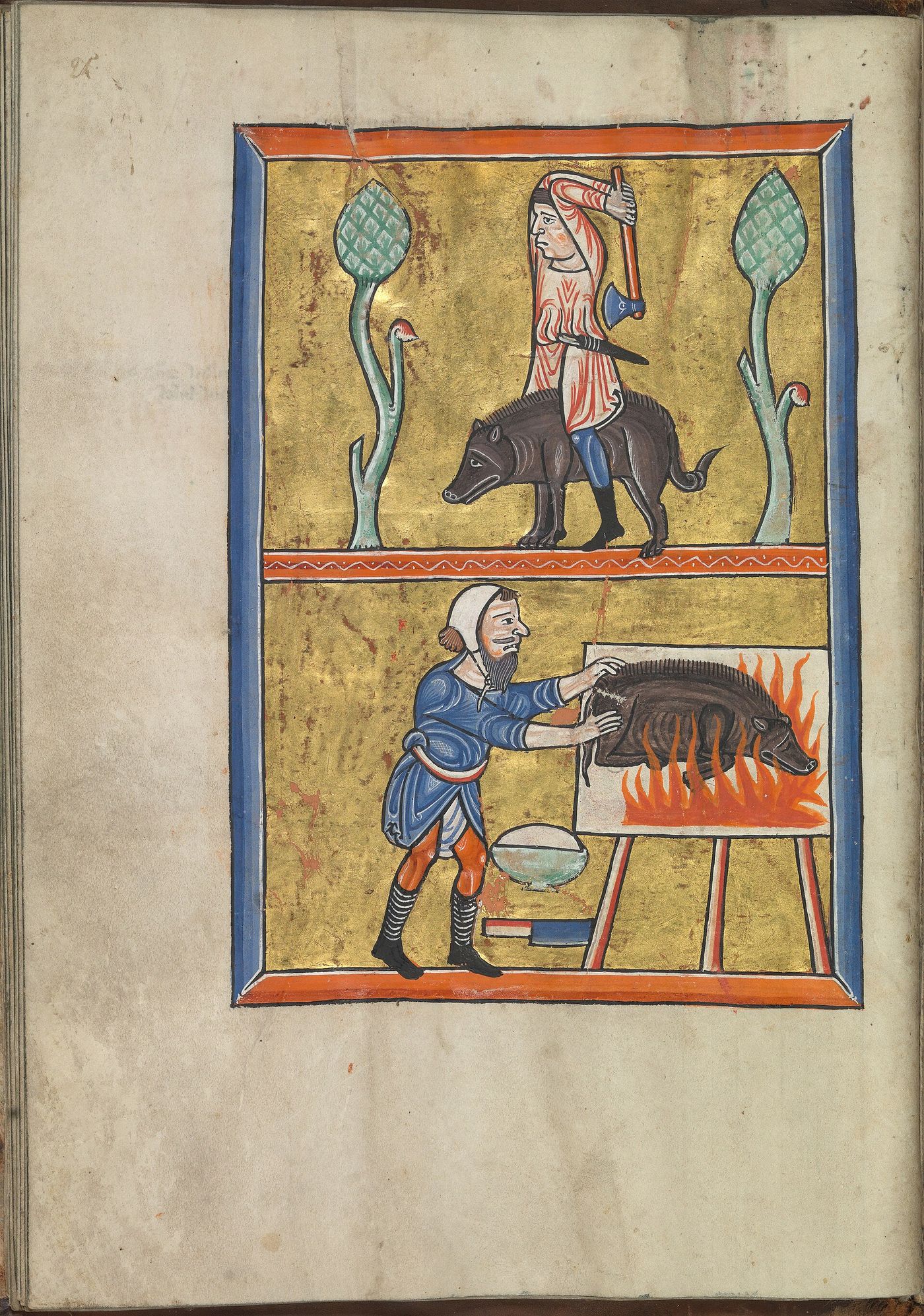
Medieval calendar illumination of a man slaughtering a pig and singeing off its bristles over a fire
December in a medieval calendar: a man slaughters a pig and singes off its bristles. From the Psalter of Eleanor of Aquitaine, around 1185.Koninklijke Bibliotheek, public domain, via Wikimedia Commons

That detail is what makes the story more than a legend. It does not rest on a later chronicler's colourful retelling but on the king's own administration: the order sits in the Close Rolls, published in T. D. Hardy's edition of the Rotuli Litterarum Clausarum, volume 1, page 238b. Some smaller details around it are less secure. Who exactly received the order, for instance, is not clear enough in the sources, so it is left out here.

They burned the fat in the tunnel, and the props burned with it. With nothing left to carry the weight, the whole corner of the keep came down.
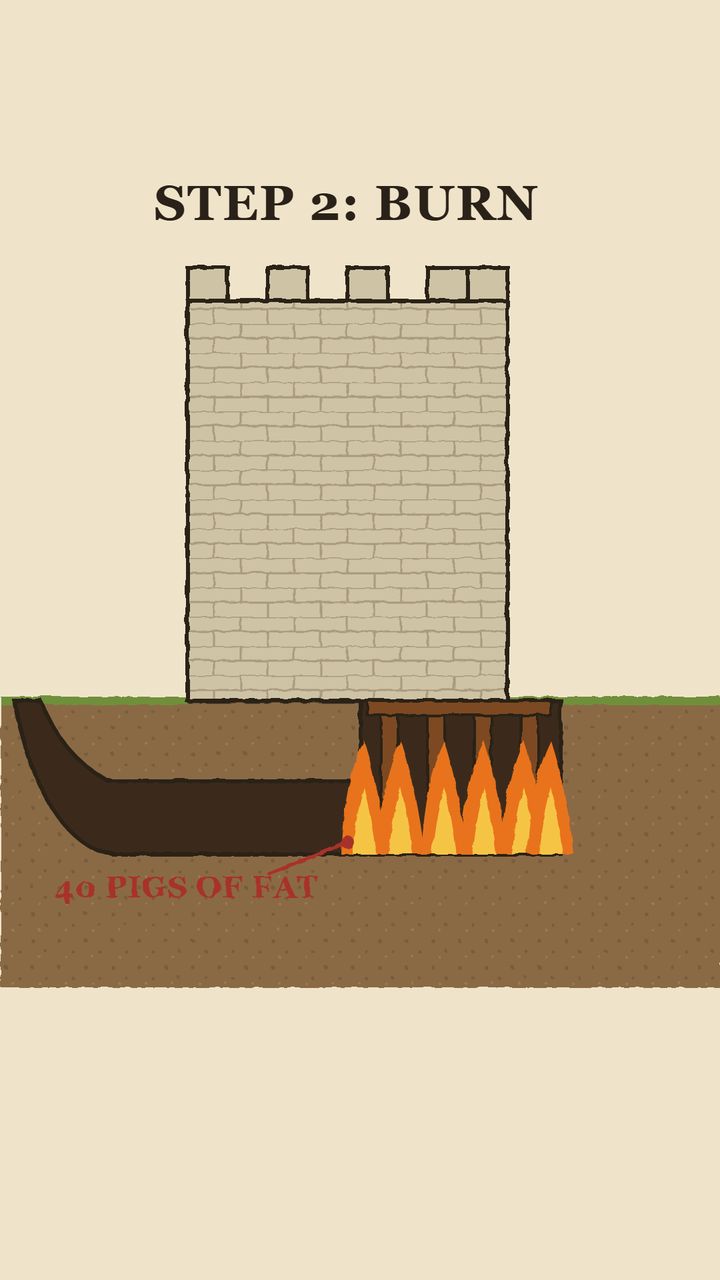
Cross-section of the keep: fire burning the timber props in the tunnel, labelled 40 pigs of fat
Step two: burn the props. The pig fat fed the fire.Diagram: Hardly Dark Ages (simplified)
King JohnWant the whole story of King John and the war of 1215? Marc Morris's biographyAffiliate linkAmazon →

Hunger finished the job

Even a collapsed corner did not end the siege at once. The keep was divided by a cross wall, and the defenders simply moved into the other half of the tower. English Heritage describes them holding out in the northern half.
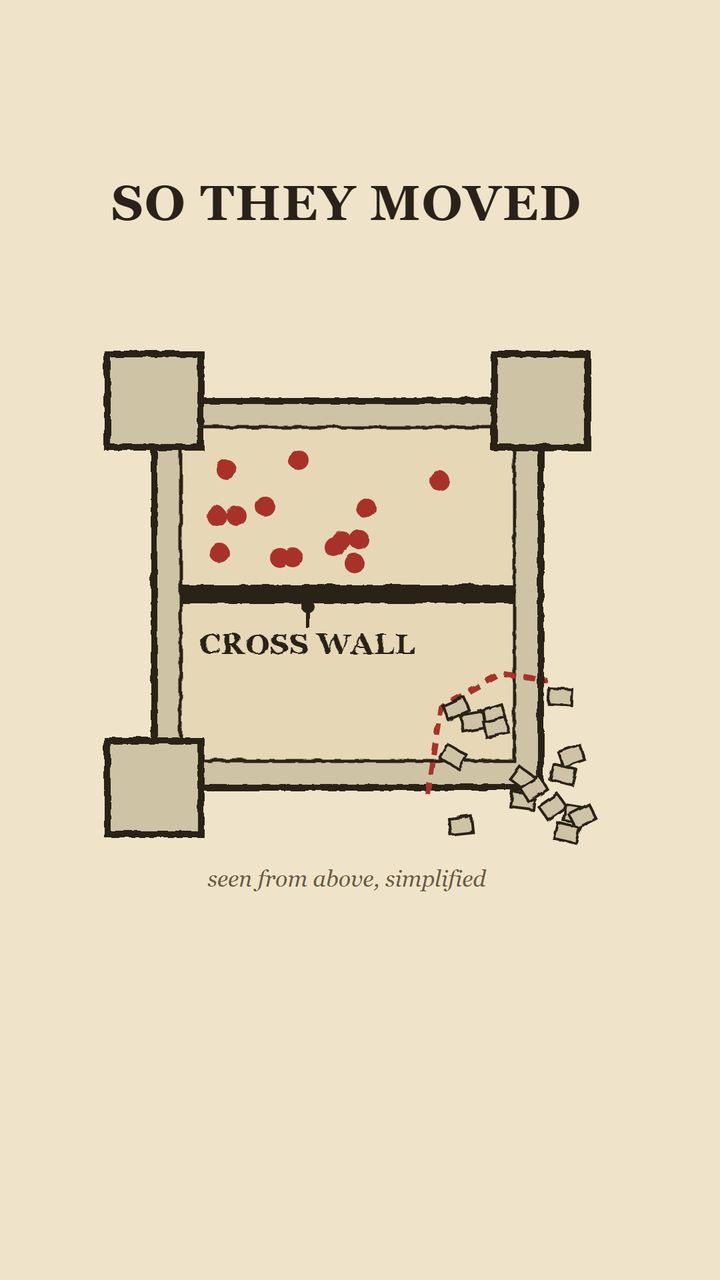
Plan of the keep seen from above: one corner has collapsed, and the defenders gather behind the cross wall in the other half
The corner was gone, but the cross wall still protected the other half of the keep.Diagram: Hardly Dark Ages (simplified)

In the end, hunger did what the pigs could not. The defenders were starved out and surrendered.

Eight hundred years later

The fallen corner was rebuilt, but not as it had been: it was rebuilt round. That is why the keep at Rochester today has three square corners and one round one. Exactly who built the round tower, and when, is not settled clearly enough in the sources, so we leave it open here. What is clear is that the odd one out among the four corners is what forty pigs look like, eight hundred years later.
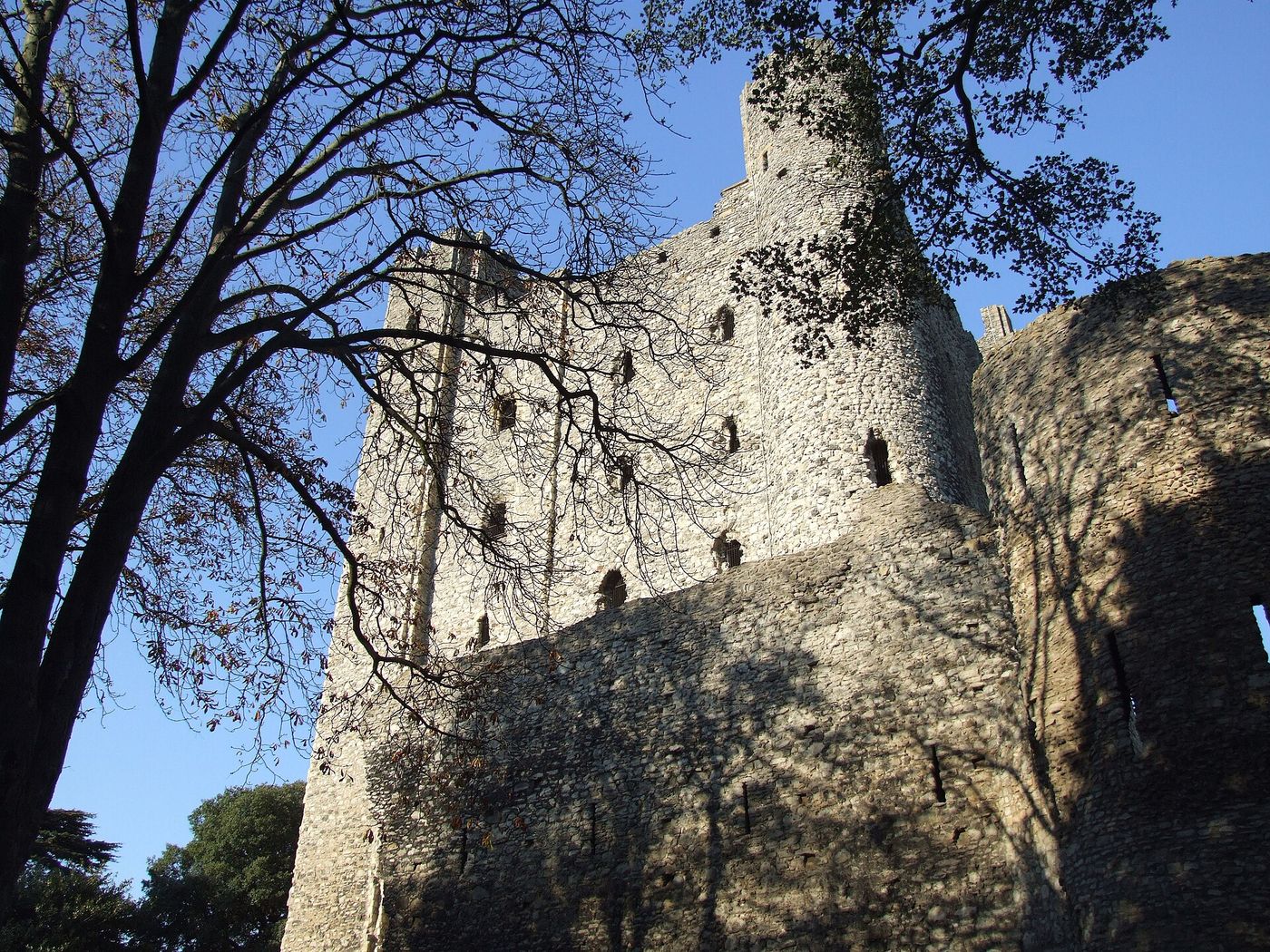
The keep of Rochester Castle with its round corner tower beside the southern curtain wall
The round corner of the keep, rebuilt after the collapse of 1215. The other three corners are square.Clem Rutter, CC BY 3.0, via Wikimedia Commons (licence)

📚 Want more?

As an Amazon Associate I earn from qualifying purchases.

Fact check 9 claims
Siege by King John, 1215 (October to December)English Heritage
Rebel barons held the castleMagna Carta Trust; English Heritage
The outer area (bailey) was taken firstEnglish Heritage
A mine was dug under one corner of the keep (south-east), propped with timberEnglish Heritage; Magna Carta Trust
Fat of 40 pigs, "too fat to eat", used to set fire to the propsEnglish Heritage, citing the primary source in the Close Rolls (Rotuli Litterarum Clausarum, Hardy 1833, vol. 1, p. 238b); Magna Carta Trust
The corner collapsedEnglish Heritage; Magna Carta Trust
The defenders withdrew into the other half of the keep (cross wall)Magna Carta Trust; English Heritage ("northern half")
Hunger forced the surrenderEnglish Heritage; Magna Carta Trust
The corner was rebuilt round; today the keep has 3 square corners and 1 round oneEnglish Heritage (image caption); Magna Carta Trust

Deliberately left out (evidence too thin): Who the order was addressed to (Hubert or "Hugh" de Burgh?), the exact date, the leader of the defenders, whether John wanted to hang the garrison, and who built the round tower and when.

Sources 3
  1. English Heritage, History of Rochester Castle
    https://www.english-heritage.org.uk/visit/places/rochester-castle/history/
  2. Magna Carta Trust, 1215 Rochester Siege
    https://magnacarta800th.com/history-of-the-magna-carta/battles/post-magna-carta/1215-rochester-siege
  3. Primary source: T. D. Hardy (ed.), Rotuli Litterarum Clausarum, vol. 1 (London, 1833), p. 238b