
The Horned Viking Is an Opera Costume
Vikings didn't fight in horned helmets. Opera singers did.
Not a Viking: an opera singer
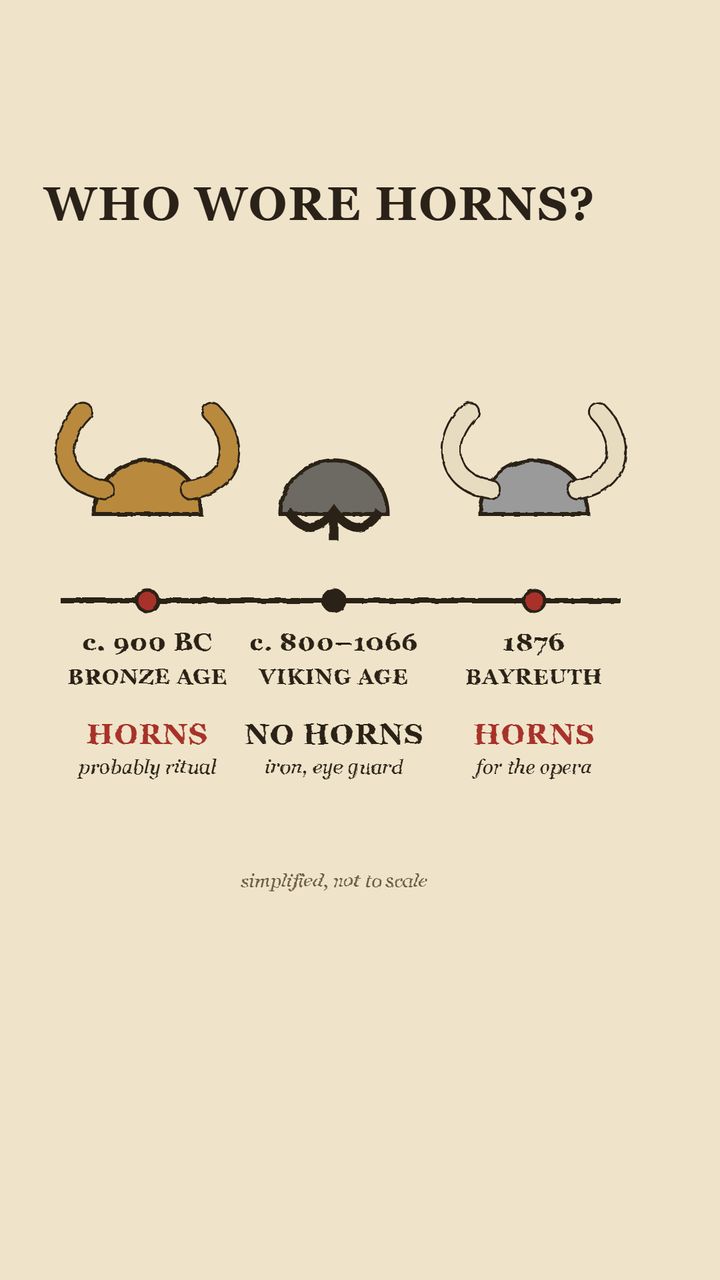
No horned helmet has ever been found from the Viking Age, and no contemporary source describes Vikings wearing one. The horned Viking took hold much later, in the late 19th century, and a decisive push came from the stage. In August 1876 Richard Wagner's Der Ring des Nibelungen was performed complete for the first time, at Bayreuth. Its costume designer, Carl Emil Doepler (1824–1905), had designed a cow-horn helmet in 1875, and he gave horned helmets to Hunding, to Gunther's retinue and to Siegfried's funeral procession.
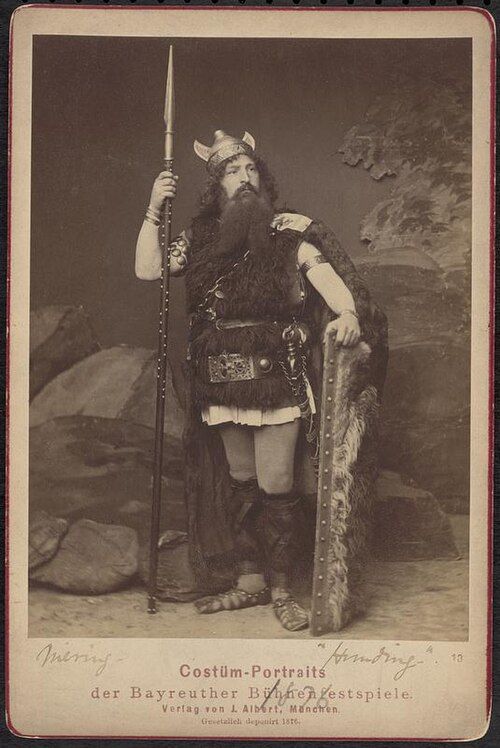

The Ring mixed Old Norse and medieval German material, and its "Germanic" look bled into the popular image of the Viking. Doepler's drawings also appeared in print, for example in W. Wägner's Nordisch-germanische Götter und Helden (1882).
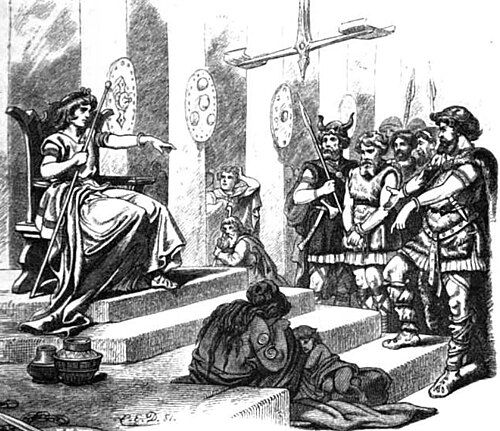

How horns came to mean "Viking"
Doepler did not invent the idea alone. In the standard academic study, Roberta Frank shows that the horned helmet had "no single progenitor". Renaissance and early modern scholars, reading Tacitus, Diodorus and Plutarch, had long given horned helmets to ancient "Germanic" and Celtic barbarians. Doepler drew on that antiquarian tradition, but Bayreuth was the moment the image went mass-market. Within about twenty years the horned helmet signalled "Viking" in paintings, children's books, advertisements and even a cruise-ship menu of 1895. The Danish encyclopaedia lex.dk gives the same picture: a myth of the later 1800s, built on Renaissance ideas and spread by the costumes of Wagner's 1876 Ring.
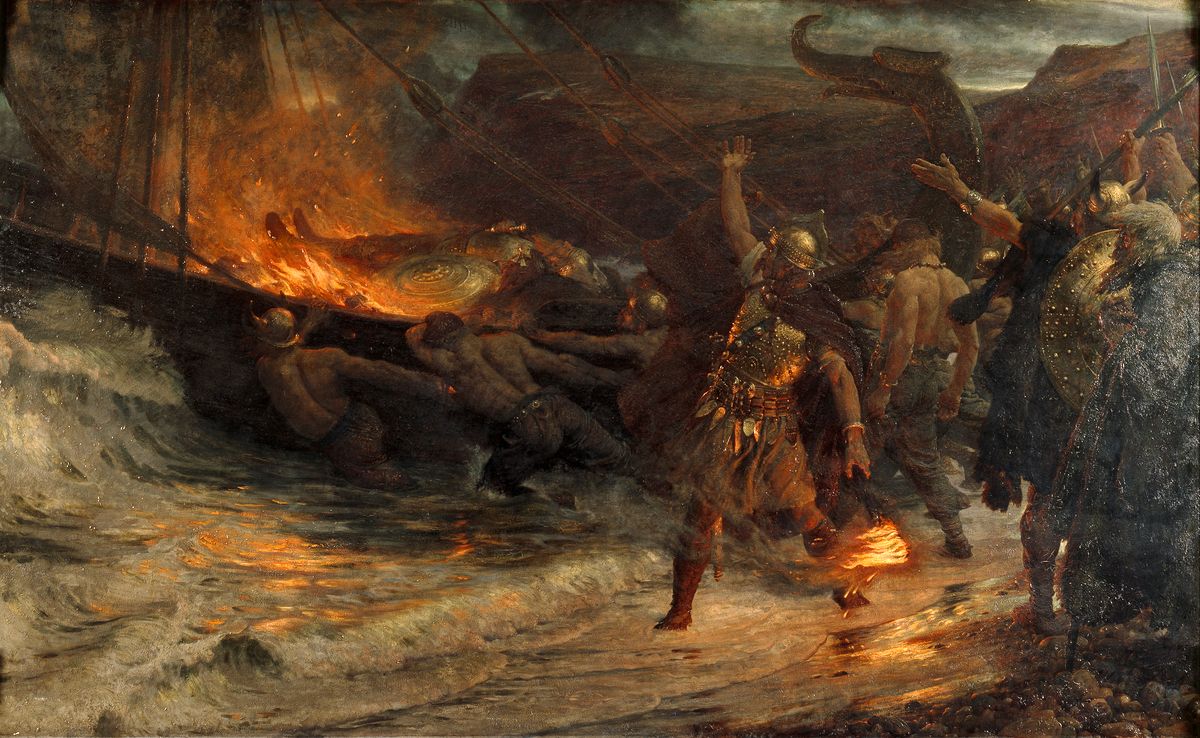

What real Viking helmets look like
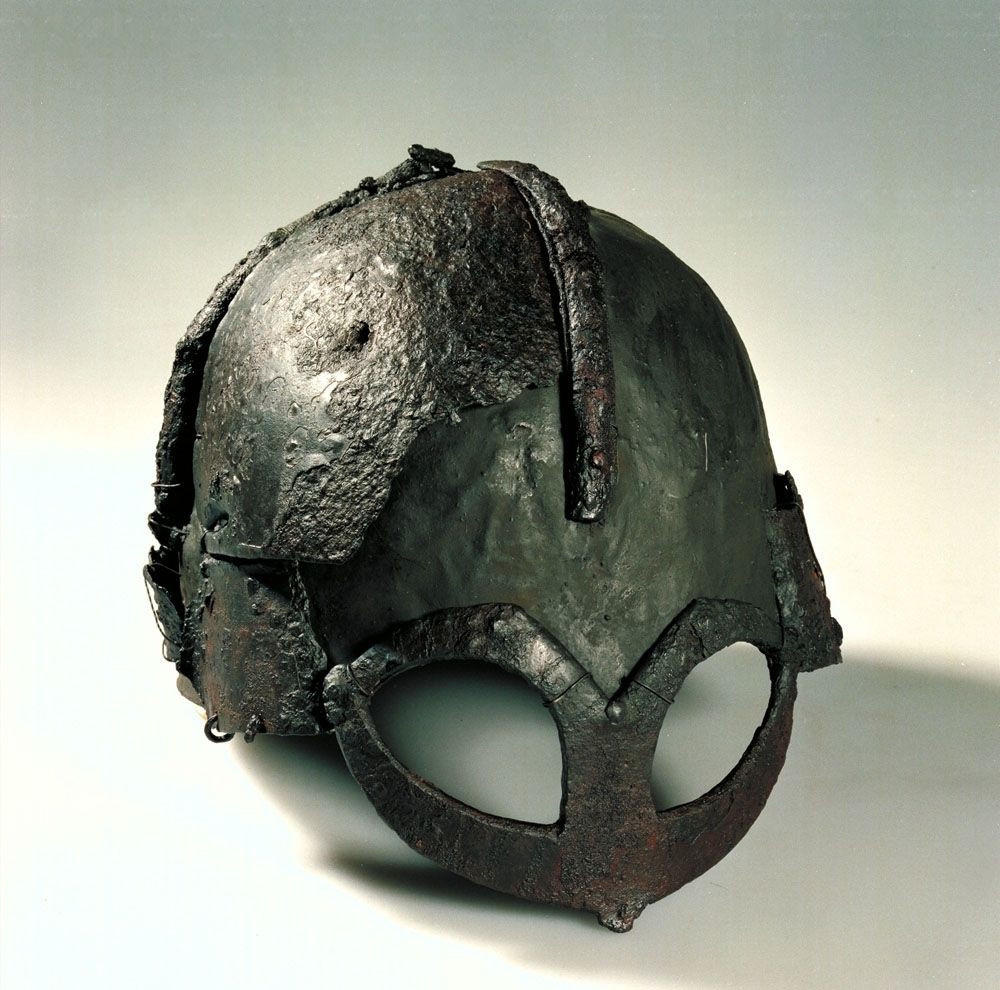
Viking helmets are extremely rare finds. The best-known was discovered in 1943 in a burial mound on the Gjermundbu farm at Ringerike, north-west of Oslo, in a rich male cremation grave of the second half of the 10th century. The grave also held mail, two swords, axes, spears, shield parts, riding gear and gaming pieces. The helmet was recovered in nine fragments and restored. It is an iron cap with a "spectacle" guard around the eyes and nose. It has no horns.
Gjermundbu was long called the world's only Viking helmet. That changed in 2020, when Chris Caple of Durham University showed that a helmet found in the 1950s at Yarm, North Yorkshire, is a 10th-century Anglo-Scandinavian helmet. So Gjermundbu is one of only two near-complete Viking helmets known, and neither has horns. Other Viking-period helmet finds are fragments. The National Museum of Denmark adds some practical points: horns would get in the way in combat and would be a nuisance aboard cramped warships. In a fight, horns are just handles for the other guy. Why so few helmets survive is debated: perhaps helmets were rarely put in graves, perhaps relatively few Vikings owned one.

Real horns, 1,700 years too early
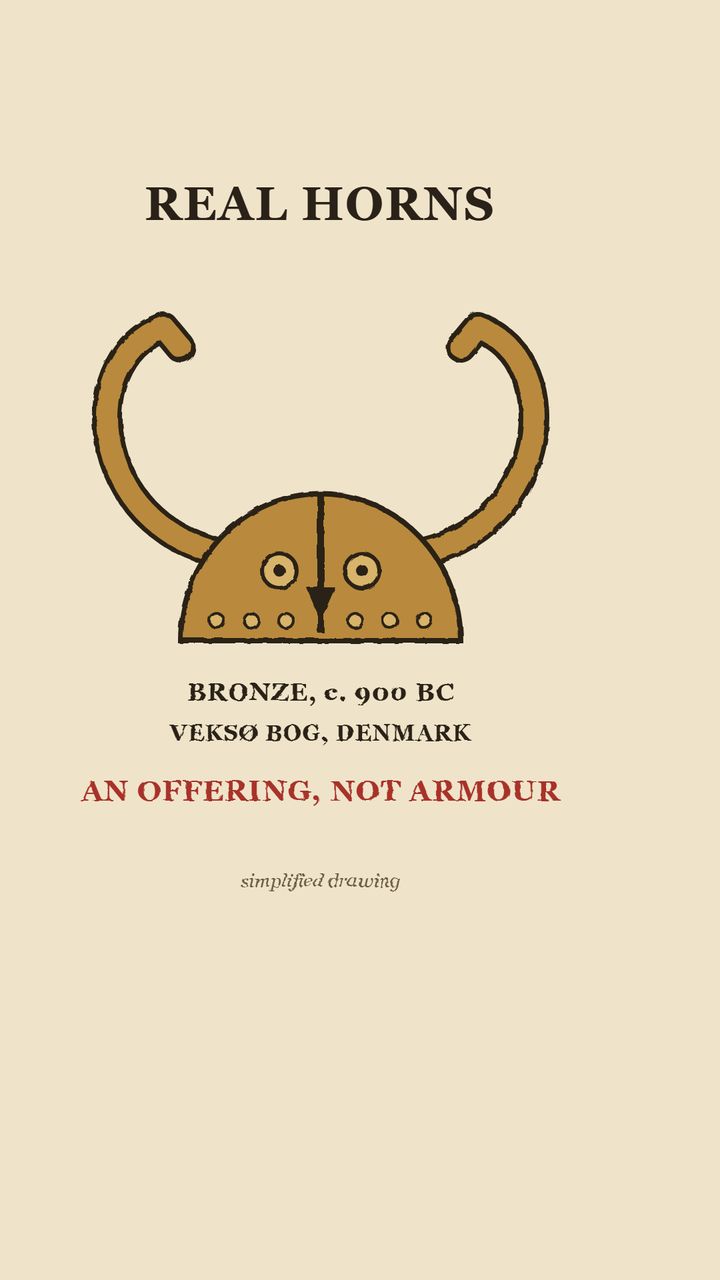
Horned helmets did exist in Scandinavia, just not in the Viking Age. In 1942 a peat cutter at Brøns Mose near Veksø (Viksø), north Zealand, Denmark, struck two near-identical bronze helmets with large curved horns, eyes and a beak. They had been placed in the bog as an offering. A plug of birch tar on one horn was radiocarbon-dated, placing the deposit around 900 BC: roughly 1,700 years before the Viking Age began, around 793/800. The researchers link them to horned "warrior" imagery of the Late Bronze Age from Sardinia to Iberia and argue they were ceremonial, not battle gear. Horned figures also appear on Bronze Age rock carvings in western Sweden and on small bronze figures such as those from Grevensvænge in Denmark.
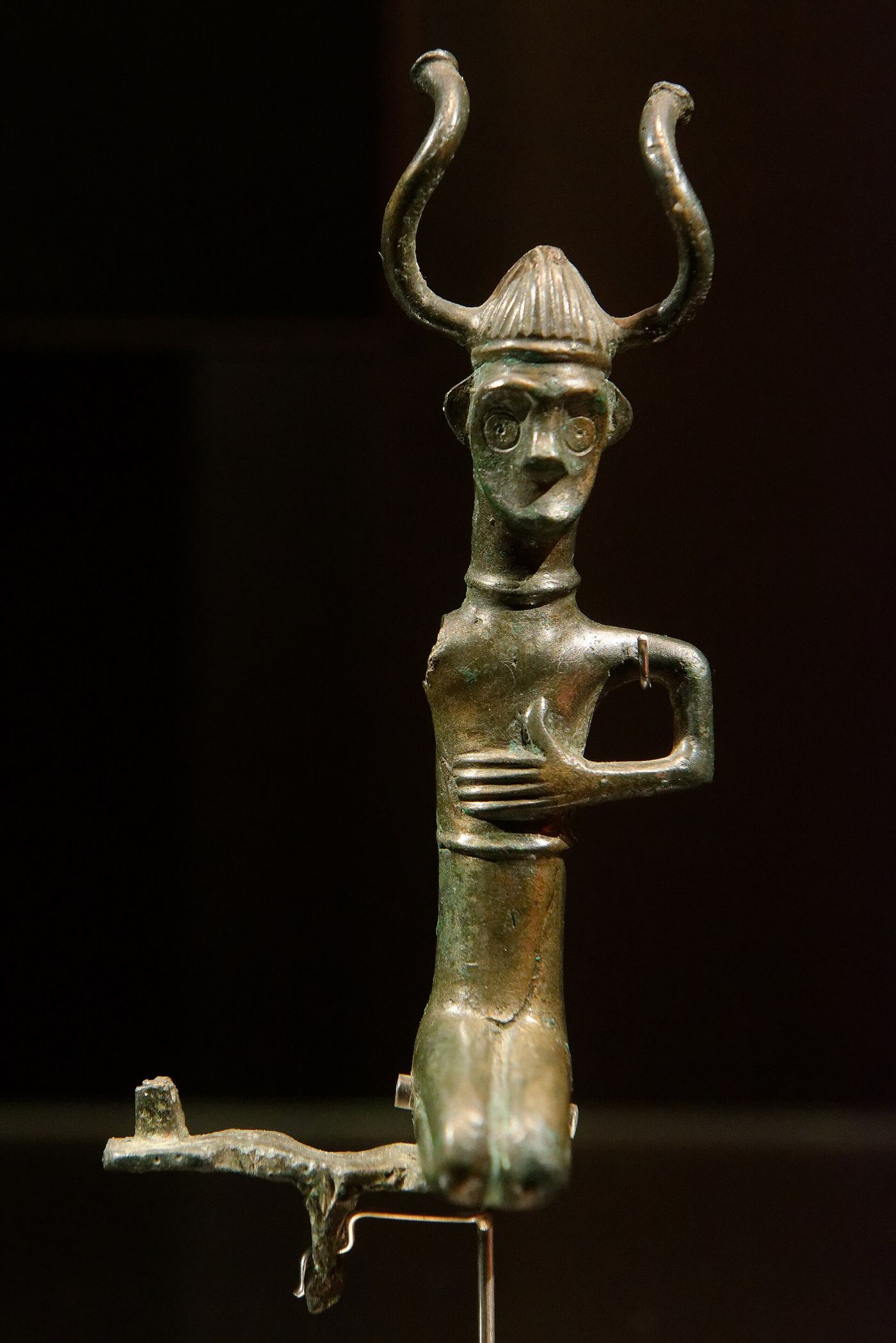

One nuance: some Viking-period images, such as the Oseberg textile, do show horned figures, probably in ritual contexts, and the National Museum of Denmark says some warriors may have worn such headgear "for display or for cultic purposes". That is why the claim here is that Vikings did not fight in horned helmets, not that nobody ever wore horns. No horned helmet from the Viking Age has ever been found. So if your Viking has horns, he is not a Viking. He is in an opera.