Hardly Dark Ages

Short 04 · Myth vs. 2011 study · 2 min read

Knights Didn't Need Cranes

Were knights so heavy they had to be lowered onto their horses by crane? No. That's showbiz, not history.

The knight on a crane

You have probably seen it in films: a knight in armour so heavy that he has to be lifted onto his horse with a crane. It is a memorable image. It is also not history.

The picture is so familiar that many people assume it must be based on something real. So it is worth asking three questions: what the evidence says, where the image comes from, and what armour was actually like to wear.
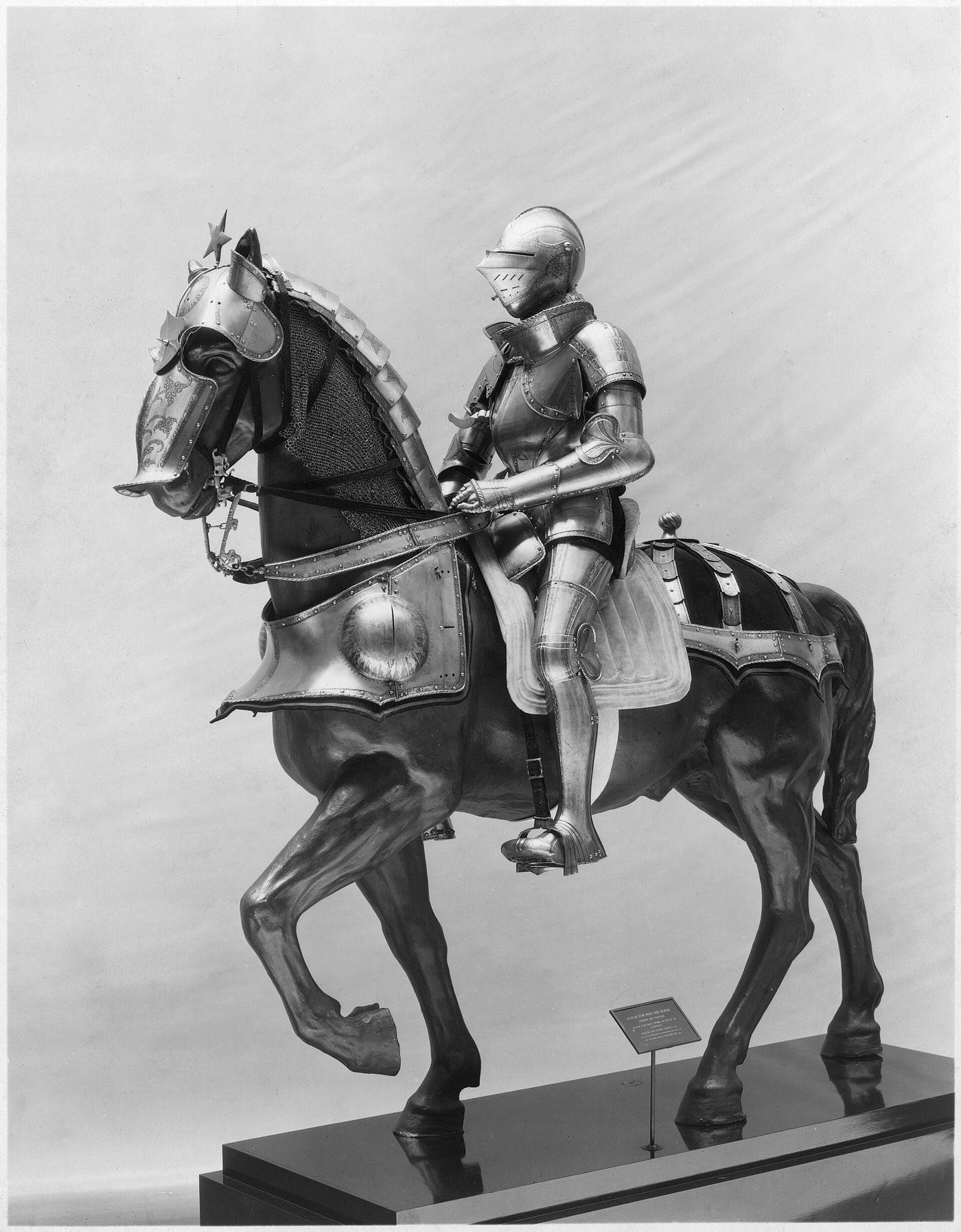
Full plate armour for a rider and his horse on display at the Metropolitan Museum of Art
Armour for man and horse made for Baron Pankraz von Freyberg, by Wolfgang Grosschedel. The Metropolitan Museum of Art.Wolfgang Grosschedel; The Metropolitan Museum of Art, CC0, via Wikimedia Commons

There is no evidence that any knight was ever winched into the saddle. Sky HISTORY says such a device never existed outside the imagination of fiction writers, and Smithsonian Magazine likewise speaks of little to no evidence.
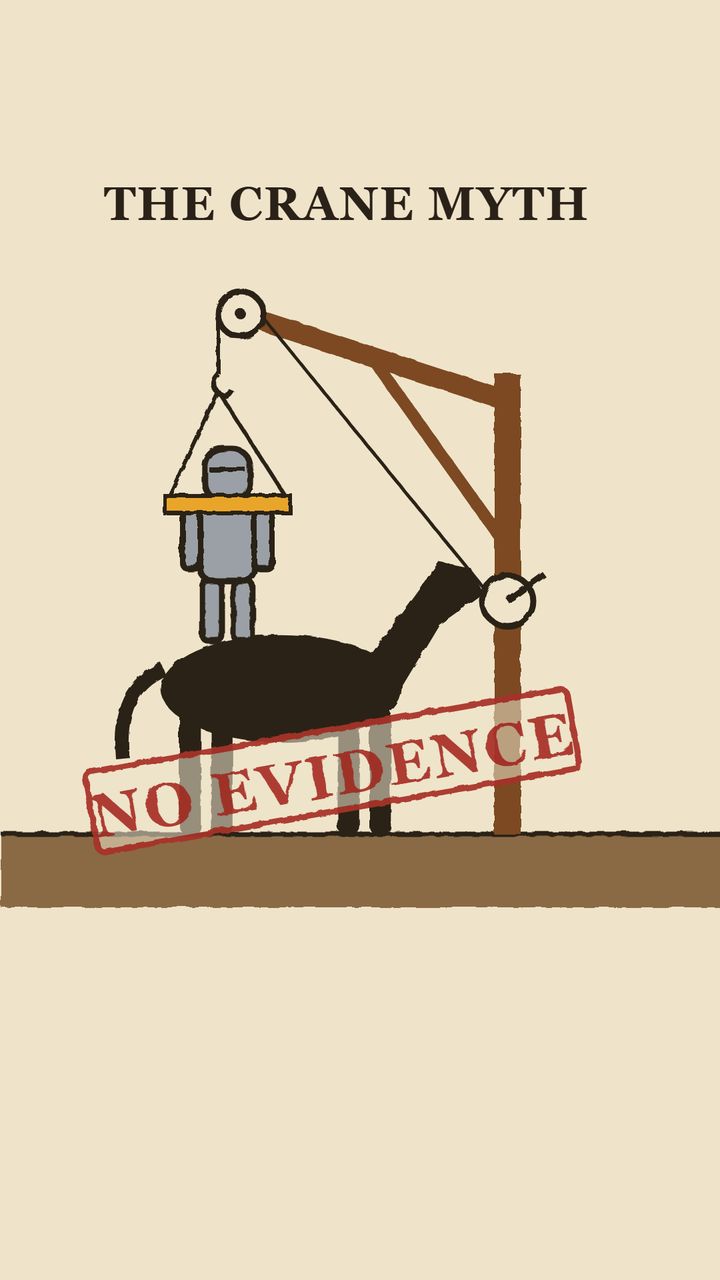
Diagram of a knight hanging from a crane above a horse, stamped NO EVIDENCE
The myth: a knight lowered onto his horse by crane. There is no evidence it ever happened.Diagram: Hardly Dark Ages (simplified)

Where the crane came from

The crane lives in fiction. Writers like Mark Twain used the idea. Then, in 1944, the film Henry V put a crane-like contraption on screen.
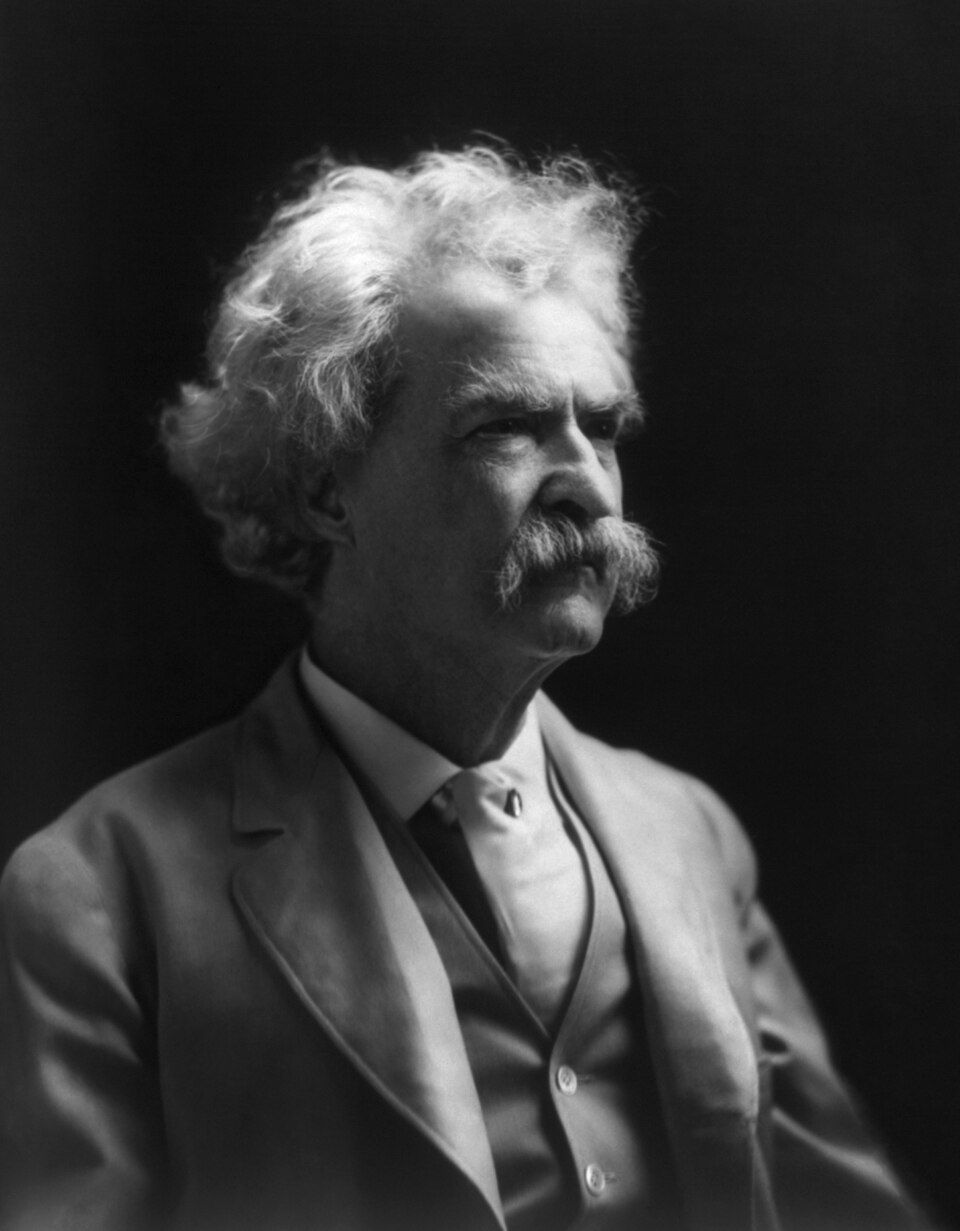
Portrait photograph of Mark Twain
Mark Twain, one of the fiction writers who used the motif. Photo: A. F. Bradley.A. F. Bradley, Public domain, via Wikimedia Commons

The film's armour adviser was no amateur: Sir James Mann, Master of the Armouries. According to Sky HISTORY, he was not impressed by the scene. So the best-known screen version of the myth was made with the Master of the Armouries himself as adviser, and he did not approve.

How knights actually got on their horses

The real answer is unspectacular. A knight put his foot in the stirrup and swung himself up. At worst, he might use a small stool. In other words, getting into the saddle in armour worked much like getting into the saddle without it. No winch, no ropes, no scaffolding.
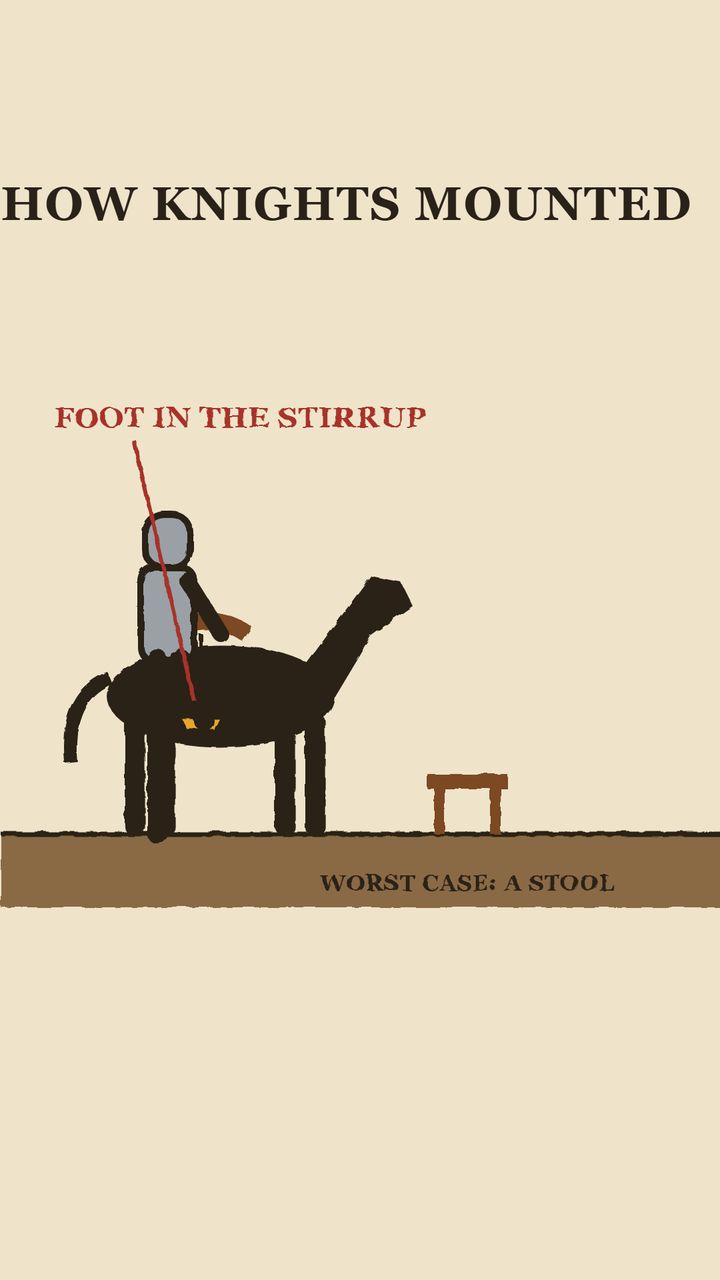
Diagram of an armoured knight mounting a horse using the stirrup
How it actually worked: foot in the stirrup, swing up. Worst case, a small stool.Diagram: Hardly Dark Ages (simplified)
English Medieval Knight 1400–1500What a late medieval knight actually wore, illustrated (Osprey)Affiliate linkAmazon →

Heavy, yes. Helpless, no.

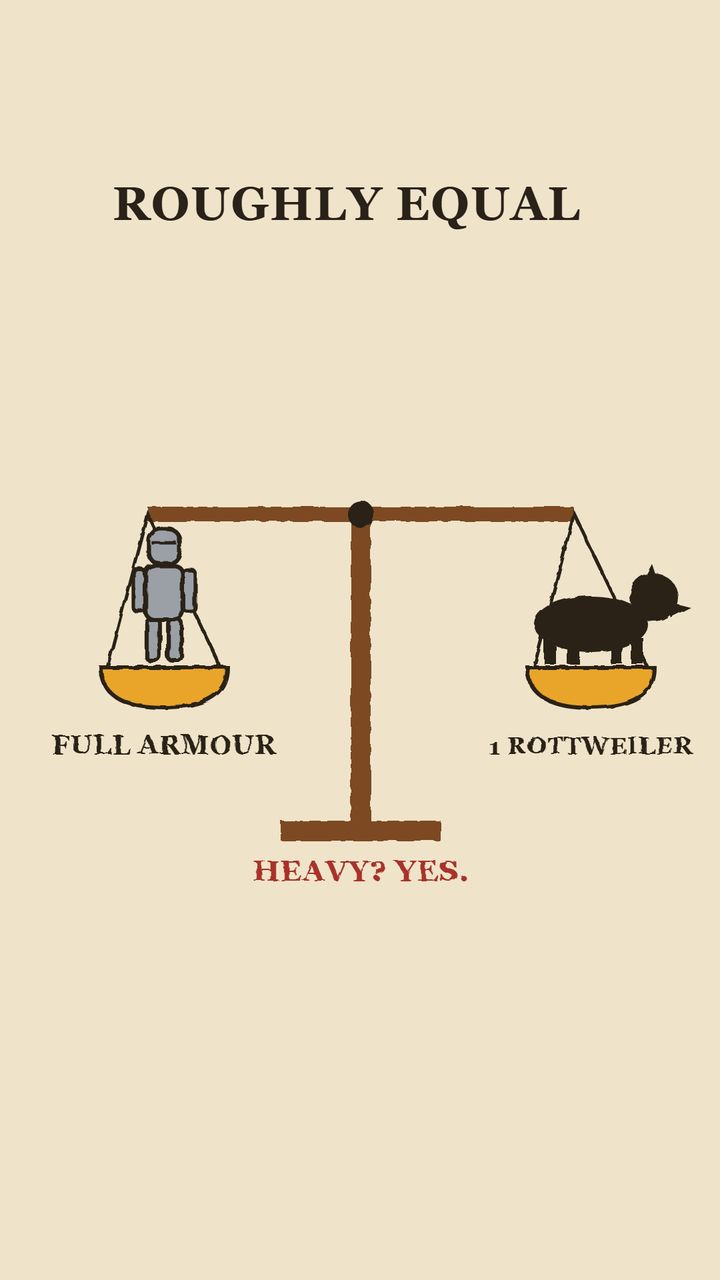
None of this means armour was light. Sky HISTORY compares a full suit to the weight of a grown Rottweiler. We deliberately do not give an exact figure in kilograms here, because the sources do not agree on one. The comparison gives a sense of scale: heavy, but not superhuman.
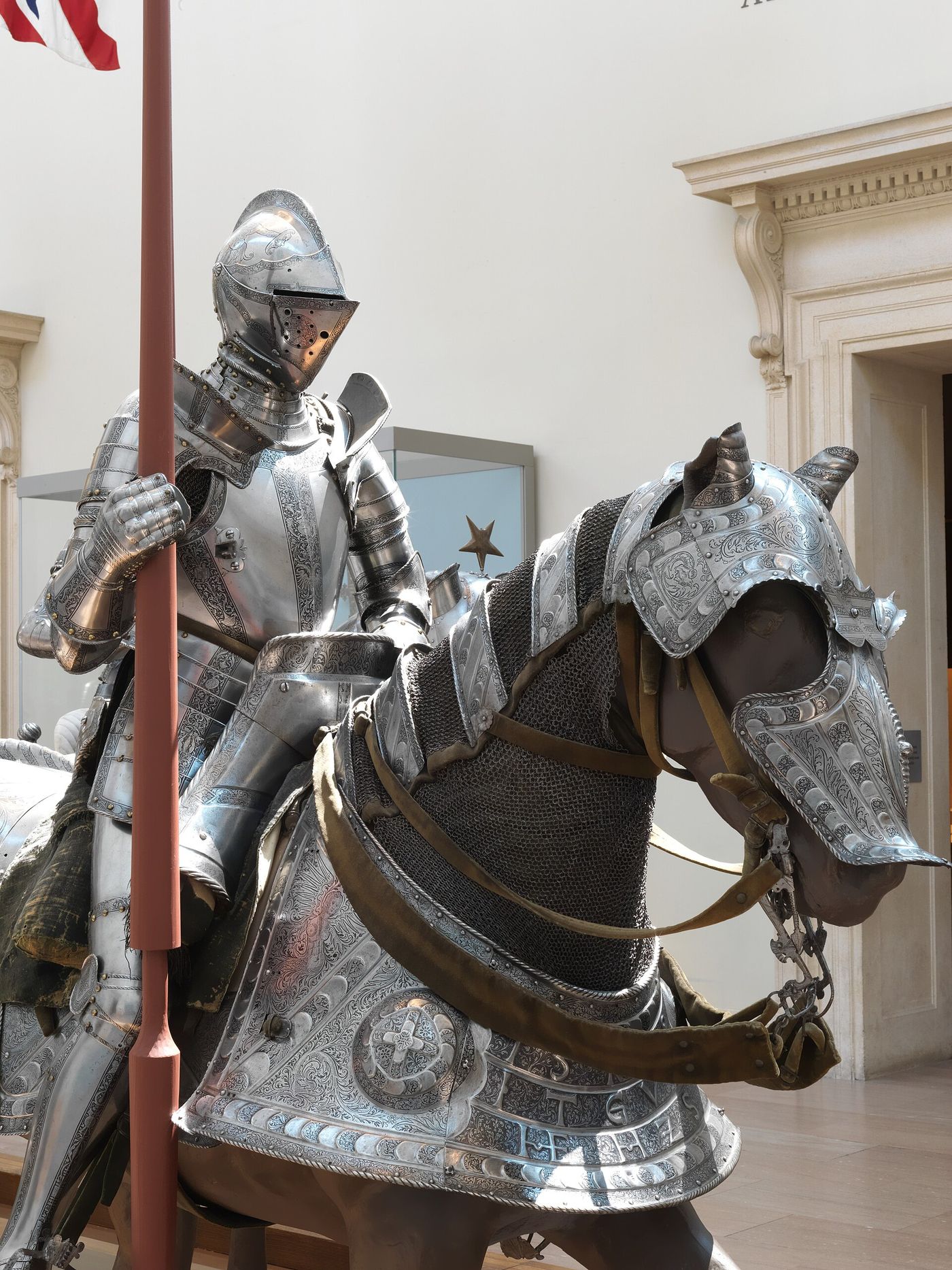
Suit of plate armour on display at the Metropolitan Museum of Art
Armour by Kunz Lochner. The Metropolitan Museum of Art.Kunz Lochner; The Metropolitan Museum of Art, CC0, via Wikimedia Commons
Diagram comparing a full suit of armour with a grown Rottweiler
A full suit of armour weighed roughly as much as a grown Rottweiler.Diagram: Hardly Dark Ages (simplified)

Armour was also tiring. A 2011 study from the University of Leeds (Askew et al., published in Proceedings of the Royal Society B) found that walking in plate armour took about twice the energy, roughly 2.1 to 2.3 times as much. That is a real cost: a man in armour would tire faster than one without it. But tiring faster is a long way from being stuck. Smithsonian Magazine's headline on the subject puts it neatly: knights were "pretty spry" in their suits of armour.
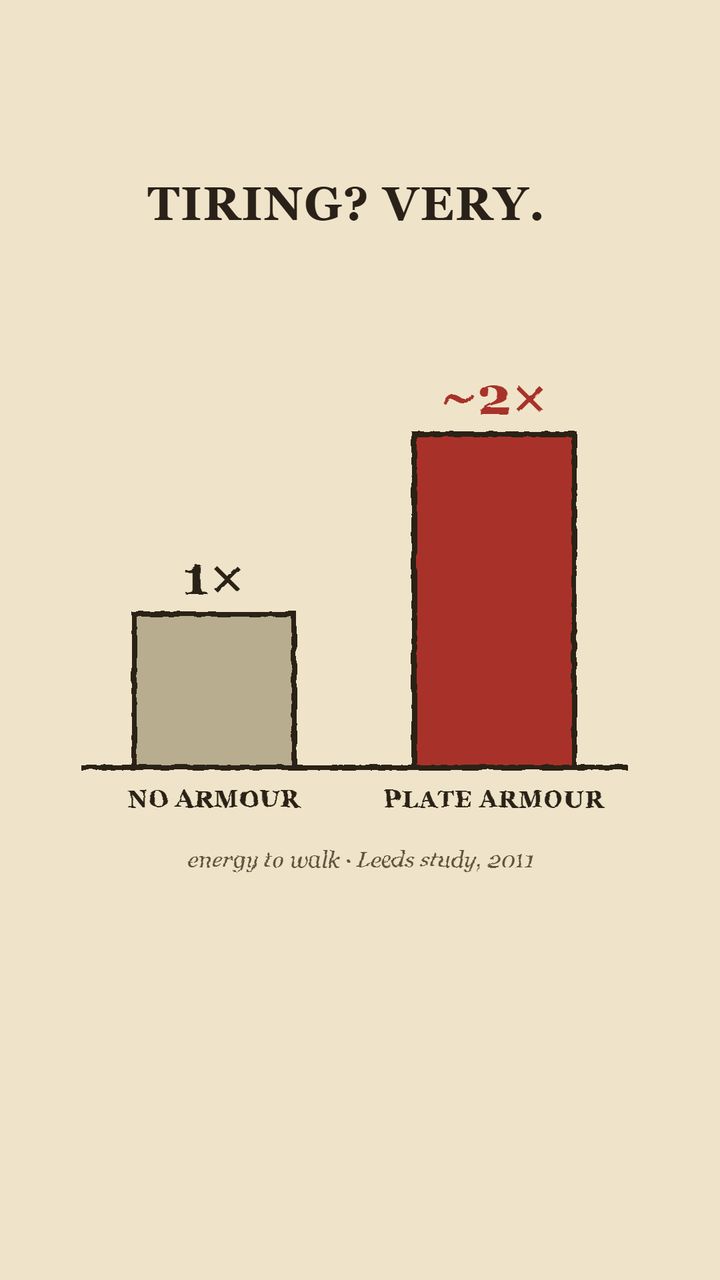
Diagram showing that walking in plate armour needs about twice the energy
The 2011 Leeds study: walking in plate armour took about twice the energy.Diagram: Hardly Dark Ages (simplified)

So: heavy, yes. Exhausting, yes. Helpless, no. The next time you see a knight on a crane, that is not history. That is showbiz.

What we left out

You may have read that the crane myth goes back to a Punch cartoon from 1843. We could not verify that, so it is not part of this story. We also avoided precise weights in kilograms, because the sources are inconsistent, and we did not go into the details of a further study by Jaquet.

📚 Want more?

As an Amazon Associate I earn from qualifying purchases.

Fact check 6 claims
There is no evidence for cranesSky HISTORY (Debunking the biggest myths about knights' armour): the device "never existed outside the imagination of fiction writers like Mark Twain"; Smithsonian (search excerpt): "little to no evidence"
Mark Twain used the motifSky HISTORY
The film Henry V (1944) shows a crane-like contraption; its adviser Sir James Mann, Master of the Armouries, was unhappySky HISTORY
Knights mounted using the stirrup, at worst with a small stoolSky HISTORY
A full suit of armour weighed about as much as a grown RottweilerSky HISTORY
Leeds 2011: walking in plate armour required about 2.1 to 2.3 times the energyUniversity of Leeds (press release), ScienceDaily; Askew et al., Proc. R. Soc. B 2011

Deliberately left out (evidence too thin): The 1843 Punch cartoon (not verified), specific weights in kilograms (sources inconsistent), and the Jaquet study in detail.

Sources 4
  1. Sky HISTORY, Debunking the biggest myths about knights' armour
    https://www.history.co.uk/shows/knight-fight/articles/debunking-the-biggest-myths-about-knights-armour
  2. Askew, Formenti & Minetti (University of Leeds), 'Limitations imposed by wearing armour on Medieval soldiers' locomotor performance', Proceedings of the Royal Society B (2011)
    https://doi.org/10.1098/rspb.2011.0816
  3. ScienceDaily, Body armor hindered Medieval warriors
    https://www.sciencedaily.com/releases/2011/07/110719194352.htm
  4. Smithsonian Magazine, Study Shows Knights Were Pretty Spry in Their Suits of Armor
    https://www.smithsonianmag.com/smart-news/study-shows-knights-were-pretty-spry-their-suits-armor-180959699/