
Spiral Stairs Weren't Built for Swords
You've been told castle stairs turn clockwise so the defender's sword arm wins. The oldest source for that is from 1902, not 1302.
The swordsman stair
It is one of the best-known castle stories. Spiral stairs in castles rise clockwise, so a defender coming down has his right, sword-carrying arm on the open, outer side of the stair, while an attacker climbing up has his right arm jammed against the central post, the newel. The castle researcher Neil Guy opens his survey of the subject by calling this the "traditional castle story" and an orthodoxy.
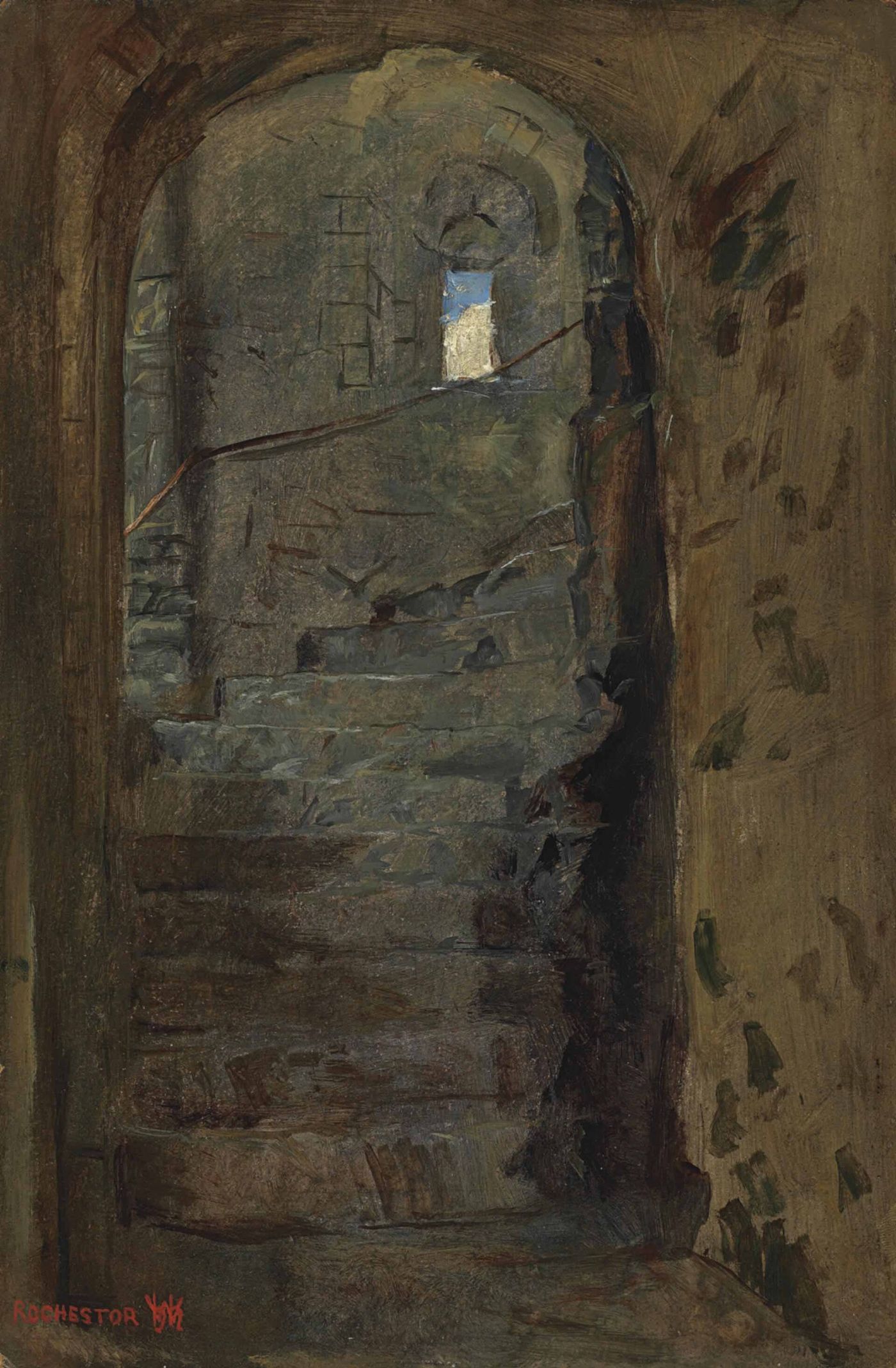

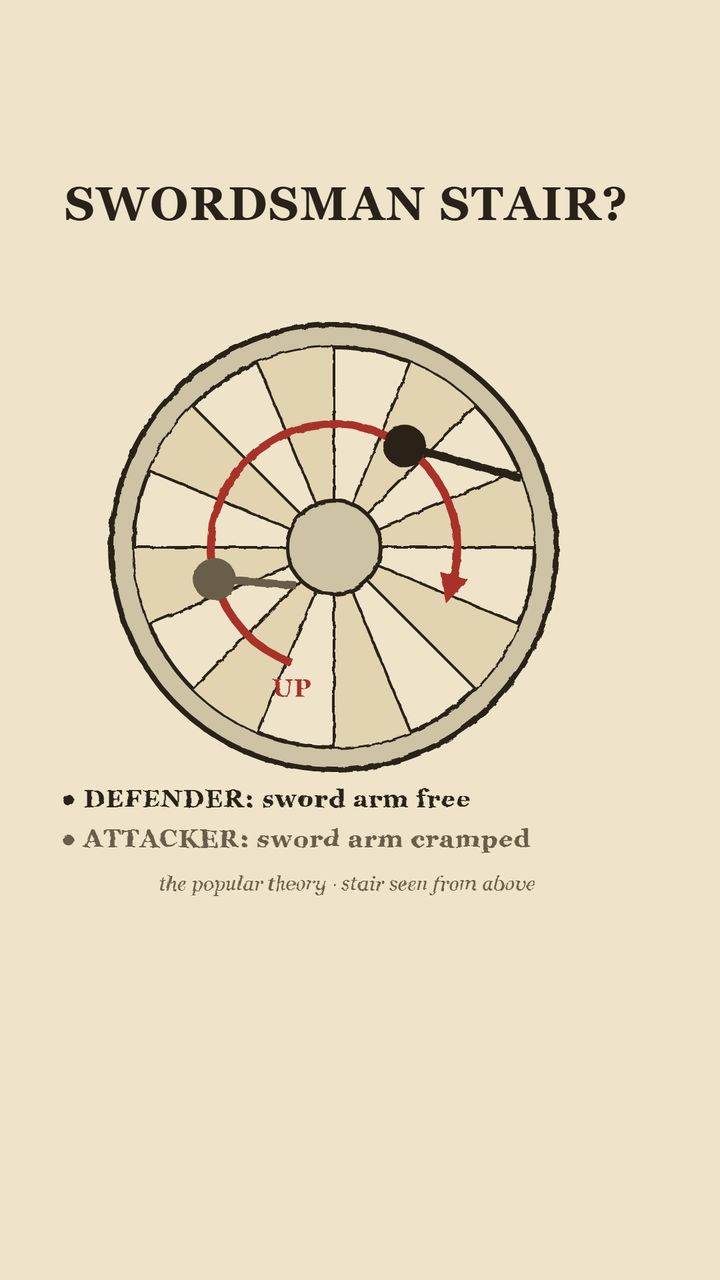
The observation behind it is largely right. The explanation is the problem: no medieval source says that stairs were turned to favour a right-handed defender.
Where the idea comes from: 1902
The buildings archaeologist James Wright traced the earliest citation he could find to Theodore Andrea Cook, an art critic, journalist and sportsman. Cook was a serious fencer: he captained the English fencing team at the 1906 Athens Games, and according to Wright he founded the Oxford University Fencing Club in 1891.
In "The Shell of Leonardo", an essay on spiral forms in nature and architecture published in The Monthly Review in May 1902 (vol. 7, no. 20, p. 106), Cook writes that a man climbing a stair of one handedness would always have his right hand free to attack the defenders, while the garrison coming down would expose their left hands. The passage reappears in his book Spirals in Nature and Art (1903, p. 145), and on p. 139 he suggests a possible military reason for the stairs at Blarney Castle and Tantallon Castle.
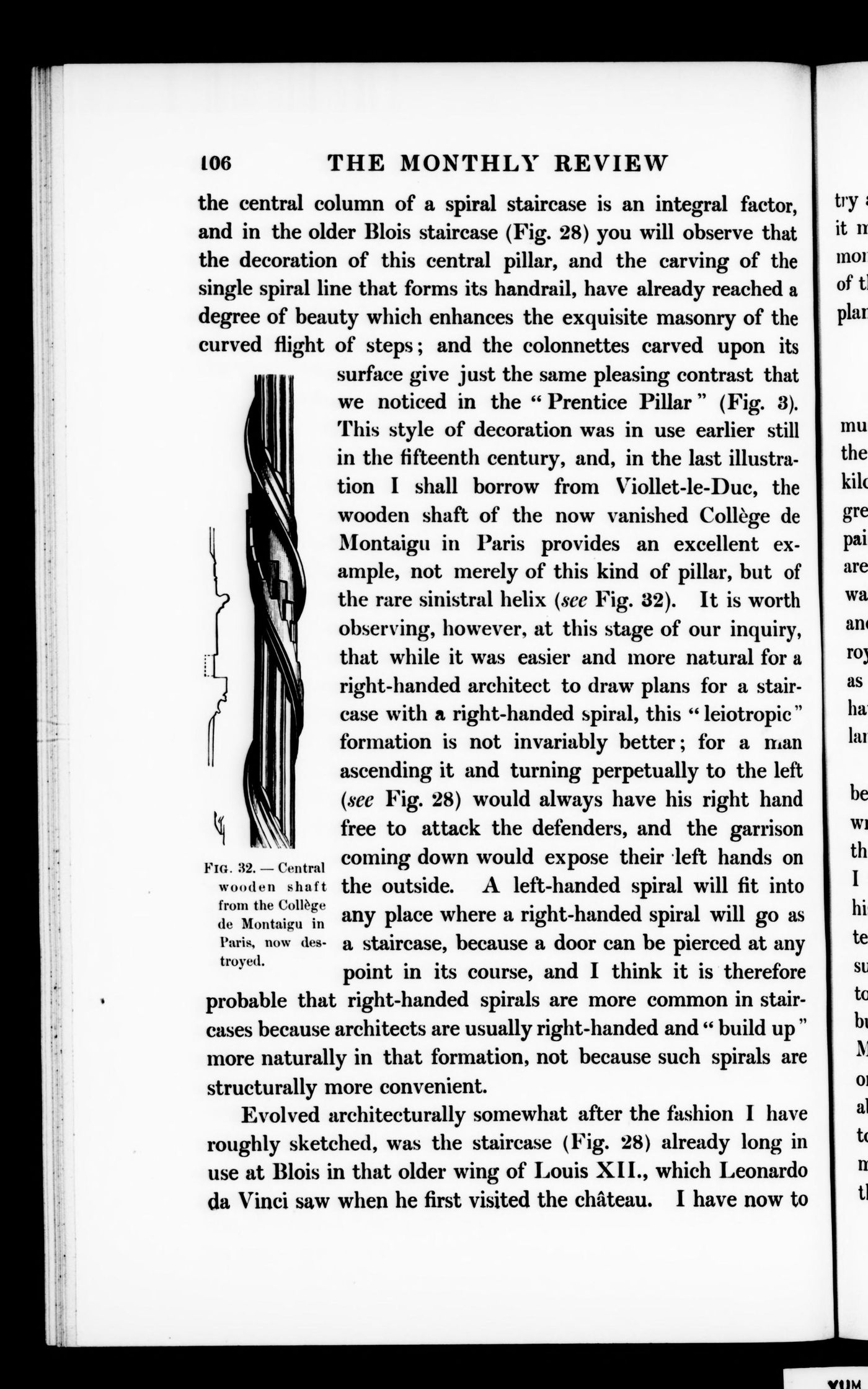
Two details matter. Cook was speculating from a fencer's point of view, not drawing on any medieval text or record of a fight. And he did not claim that stair direction in general was chosen for defence: in the same paragraph he says the more common type of spiral is probably more common because architects are usually right-handed. The neat universal rule came later. Wright shows how it spread through Guy Cadogan Rothery (1912) and the castle historian Sidney Toy (1939 and 1954).
What the buildings show
Most castle stairs do turn clockwise going up: Neil Guy notes that clockwise stairs predominate in the eleventh and twelfth centuries. But in "The Rise of the Anti-clockwise Newel Stair" (Castle Studies Group Journal 25, 2011–12) he recorded more than 85 anticlockwise spiral stairs in castles in England and Wales, dating from the 1070s to the 1500s.
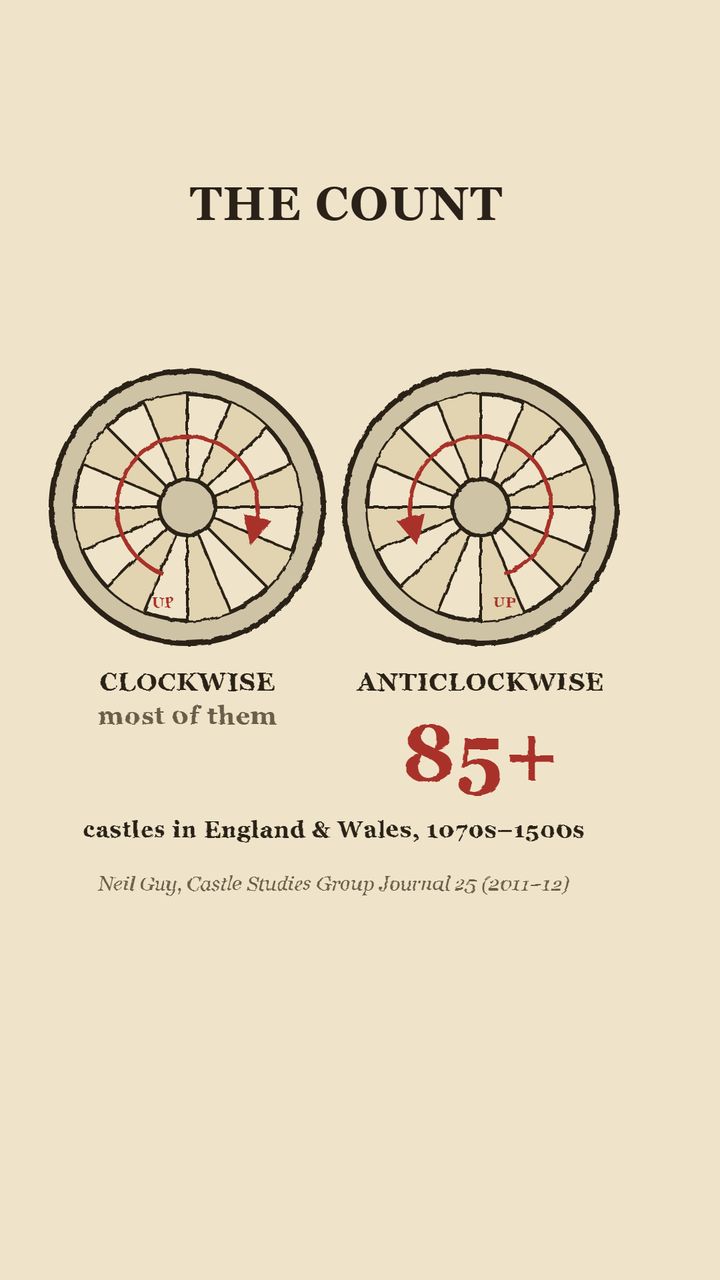
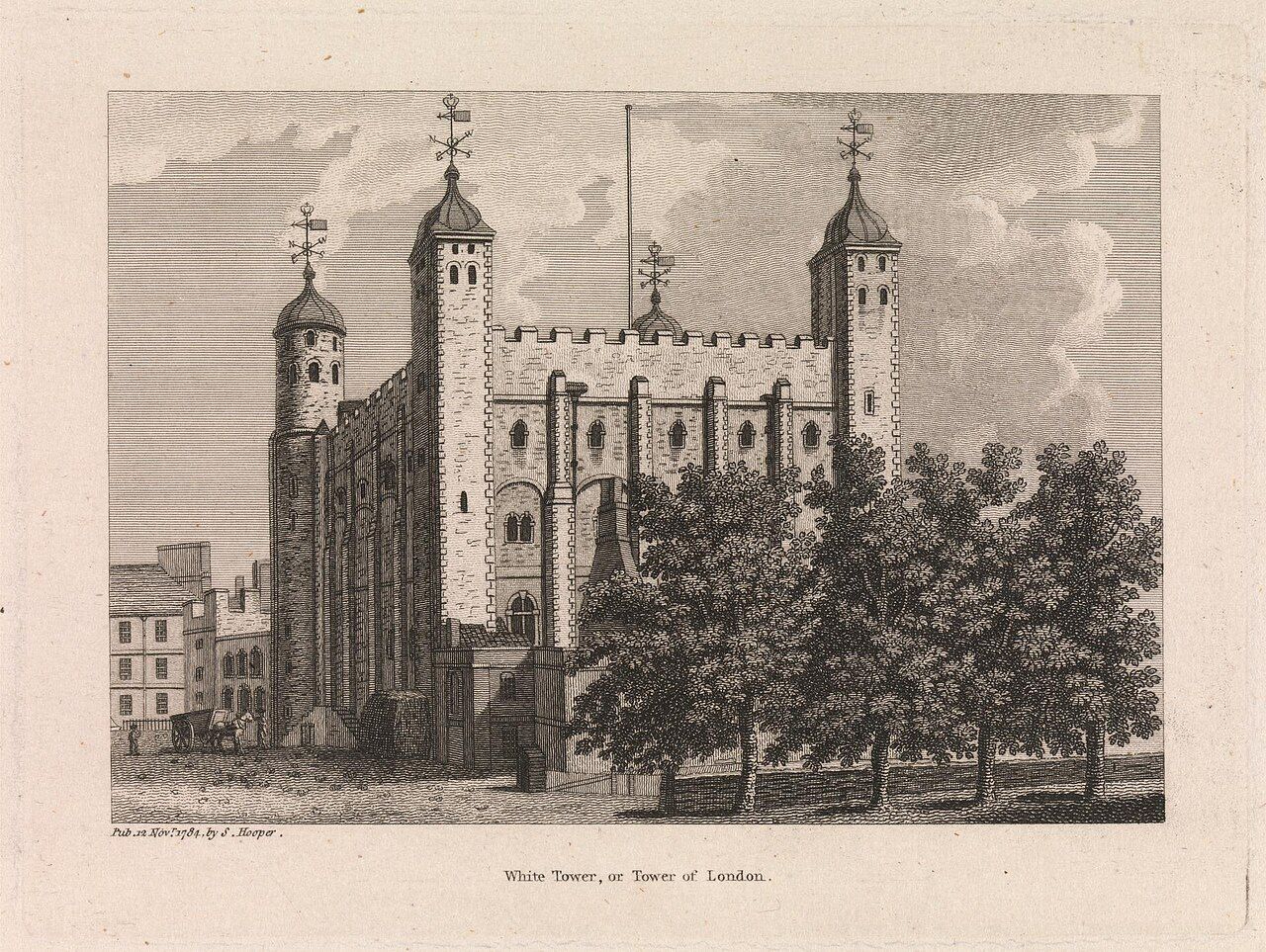
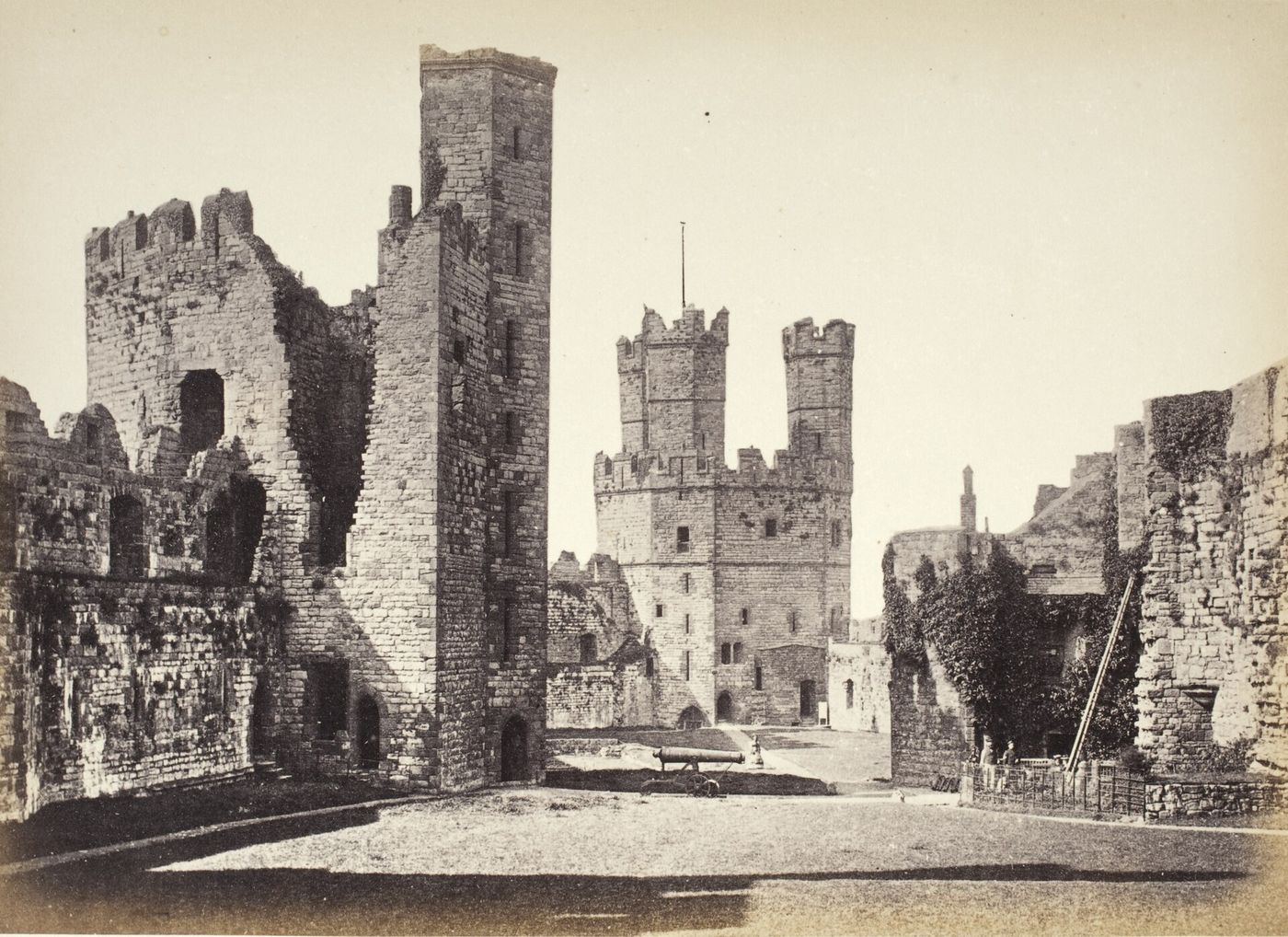
Some are in the most military buildings imaginable. In the White Tower at the Tower of London, the main stair in the north-east corner turns clockwise, but a second stair in the north-west corner turns anticlockwise; Guy suggests it may have been added to the plan around 1080. Anticlockwise stairs were used regularly in Edward I's castles in Wales in the late 13th century: at Caernarfon most of them are in the Eagle, Well and Chamberlain Towers, Conwy has one in the Bakehouse Tower, and Beaumaris and Caerphilly are also on the list.


Space, light and convenience
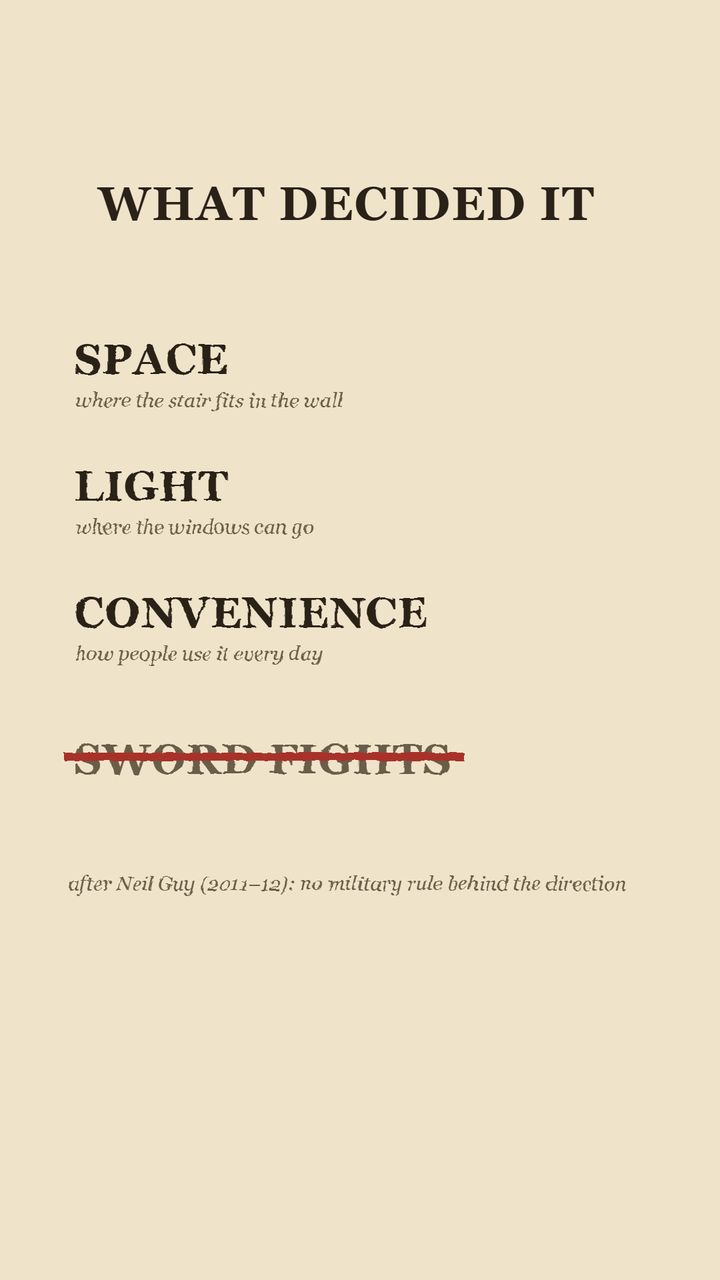
Guy's verdict is clear. There are enough anticlockwise examples to show that the choice depended on physical convenience and architectural practicalities, and there was no military ideology that demanded clockwise staircases. He also points to light sources, traffic flow (paired up and down stairs in gatehouses) and, later, simple fashion.
Why clockwise stairs are still the majority remains open. Suggestions include the handedness of the builder, ease of climbing for right-handed people, lighting and layout constraints, but none of them is proven.
Fighting on the stairs?
There is also a practical problem with the theory. Wright found no medieval evidence of stair fights deciding a siege: sieges usually ended through starvation, threats, bribery, blunders or trickery. Guy puts it bluntly: the game was up before that stage could be reached. If the enemy is already on your stairs, the stairs are not your biggest problem.
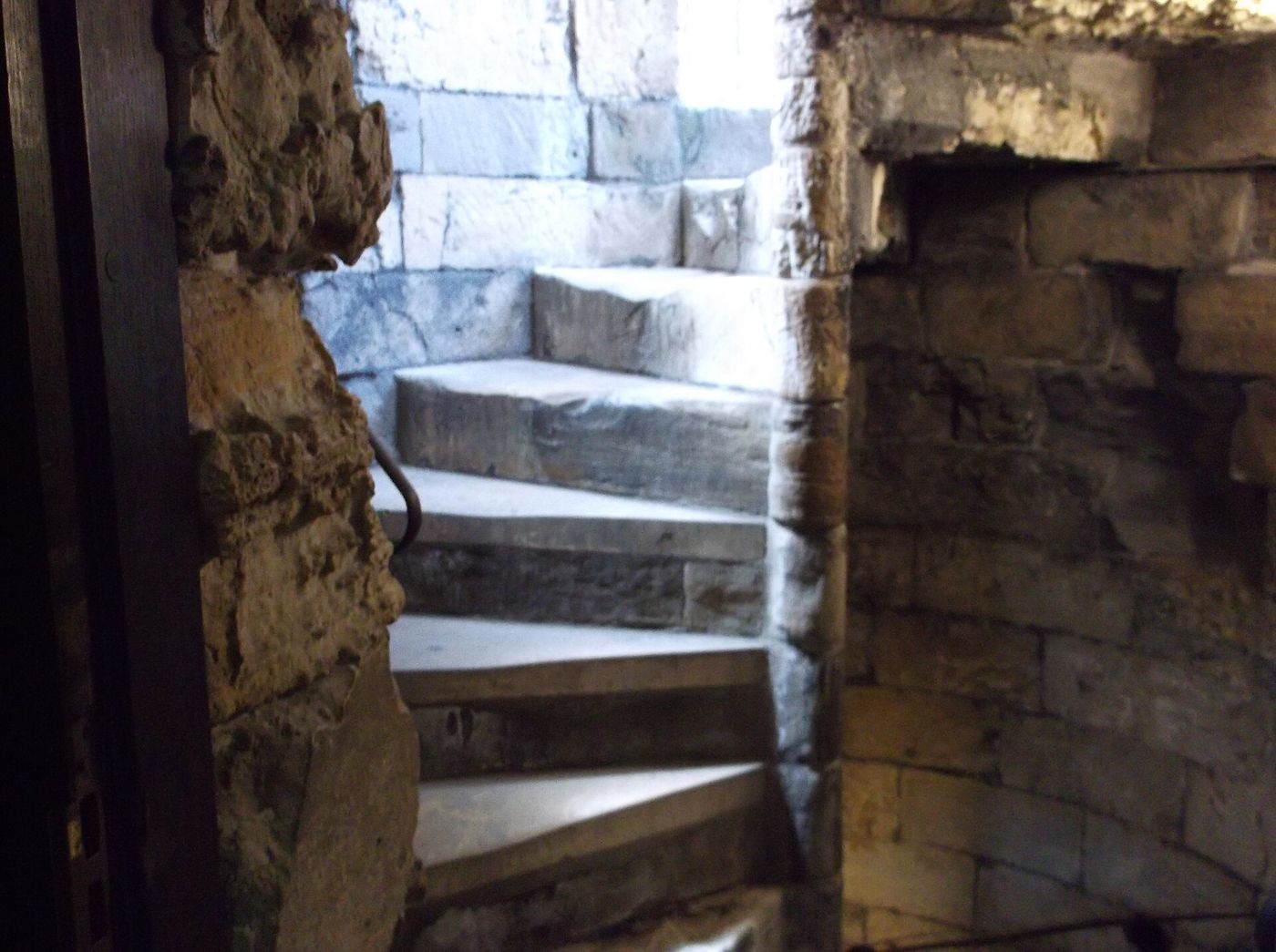

Some popular sites still argue that a clockwise stair gave defenders an advantage in practice. But nobody has produced a medieval source showing the builders intended it. The fair summary: the stairs mostly do turn clockwise, but the swordsman explanation is unsupported and contradicted by the buildings.